


Tag: Vocational Education & Career Counseling
Staff Spotlight: Ram Babu Rai
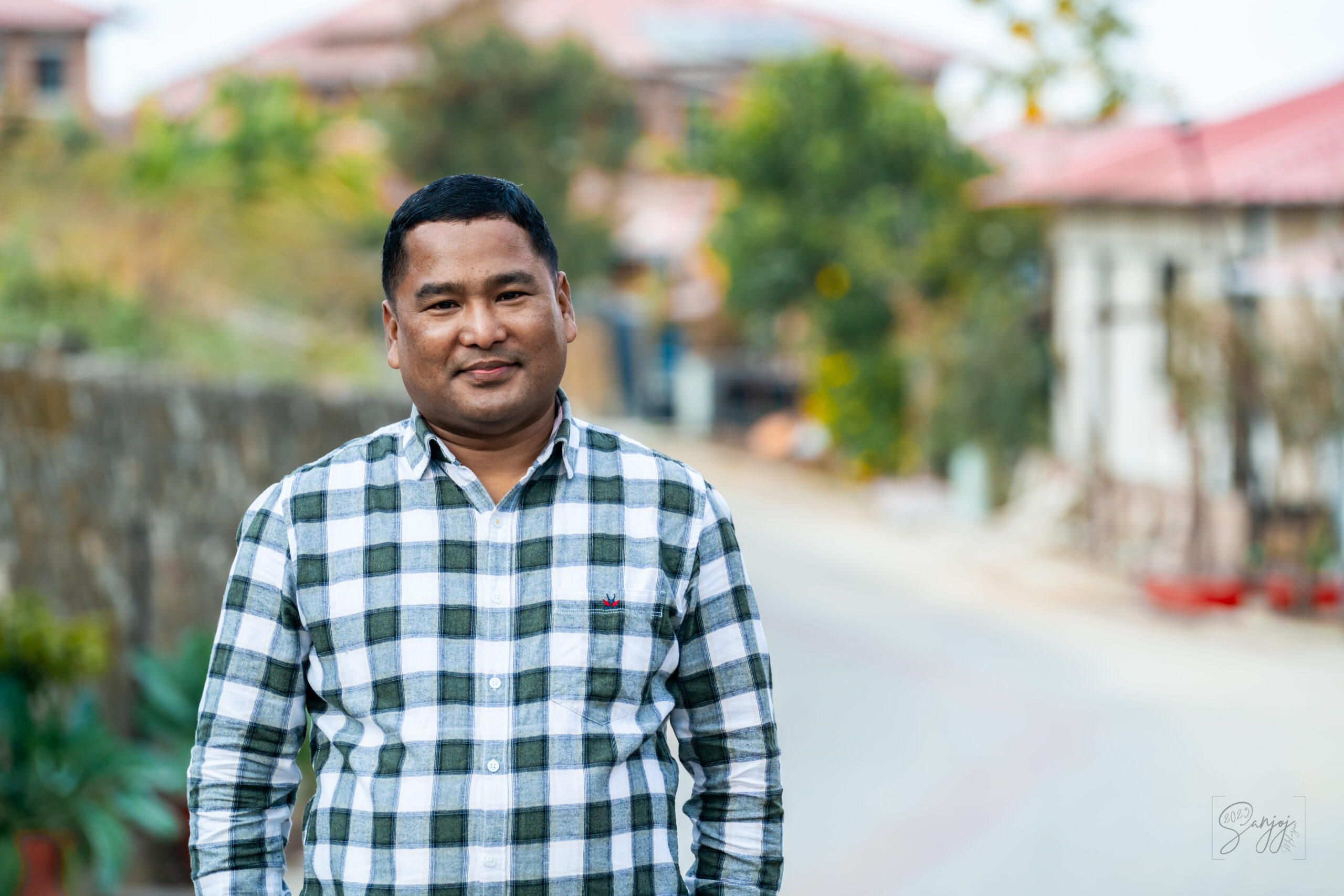
Ram Babu Rai: Kinship Care Program Officer & Technical School Scholarship Officer
In December 2023, Ram Babu Rai dropped in to check on Niraj*. Niraj is an NYF scholarship recipient who had recently completed culinary school. Niraj’s grandmother was overjoyed to welcome Ram Babu, proudly sharing stories of her grandson’s recent successes, including his wonderful new job in a Kathmandu hotel. Niraj was making more than enough money to cover all of his expenses. He had even bought his grandmother a gorgeous new sari as a gift. Beaming with joy, she placed the sari in Ram Babu’s hands so he could admire it. When Ram Babu looked up at Niraj, the young man smiled with a hard-earned confidence.
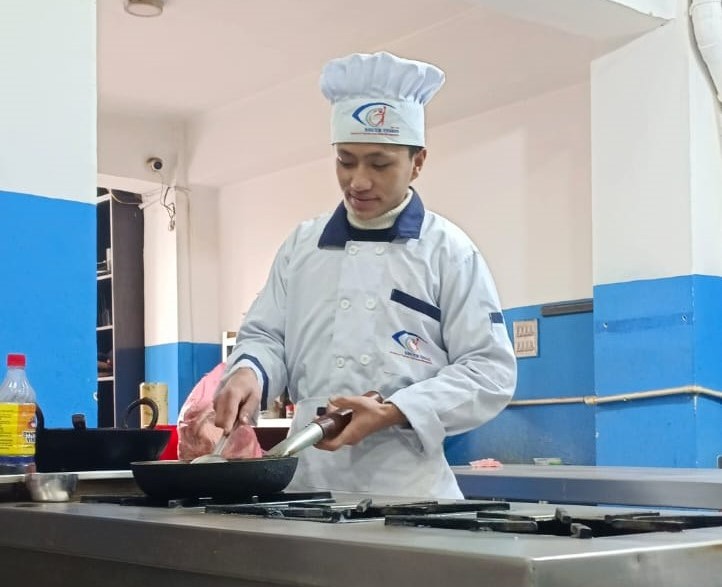
“This is the unique quality of NYF,” Ram Babu explains. “NYF takes a personalized approach. Each child is given support based on their actual needs rather than a blanket approach. We build a relationship with the children and families we serve and provide mentoring and guidance over the years. At the end of it, each individual child’s life is visibly transformed. We do not abandon children halfway.”
For children in NYF’s Kinship Care program and those receiving Technical School Scholarships, it is Ram Babu who builds and maintains that crucial relationship. He rarely has what one might call “office time”. Instead, he’s almost always out in the field, managing more than 250 individual cases at a time.
Ram Babu Rai’s Background
Ram Babu Rai comes from the Rai community, one of the oldest distinct ethnic minorities in Nepal. About 2.3% of Nepal’s population belongs to this group, mostly in eastern Nepal. Rai culture, languages, history, and traditions are unique—which has unfortunately resulted in “outsider” status within Nepal’s broader systems.
Growing up, Ram Babu lived in a small agricultural village in Nuwakot District, in the Himalayan foothills not far from Kathmandu Valley. Public education was not available for most children there, and it was given a very low priority by the community. When families could somehow afford to send children to school, they focused on educating their sons—never their daughters.
As in many rural communities throughout Nepal, arranged child marriage was very common in Ram Babu’s village, for both boys and girls. These marriages serve a complex purpose within the social network of the community, connecting families and forming the basis for close relationships into the future.
Ram Babu was only 14 when his parents arranged his marriage to Laxmi—and she was only 13. Both were too young to truly understand the impact such a marriage would have on their lives moving forward. “I don’t even recall my marriage,” Ram Babu says now. “But I still own a little coat from my wedding, reminding me how little I was at the time.”
The Realities of Child Marriage
At first, Ram Babu’s marriage didn’t change much about his life. His family was well-off enough to send him for an education, and his studies continued after his wedding. But as the years passed, Ram Babu realized that his experience and Laxmi’s experience were very different.
“While I was able to continue my education up to my bachelor’s degree,” he says, “my wife’s life was trapped in childrearing, household chores, and laboring in the farm.”
Laxmi was only 14 when they became parents for the first time, and the experience was devastating for her health. Neither of them had realized the long-term impact early childbearing could have, and Ram Babu was horrified. He was even more horrified to learn how common Laxmi’s experience was for girls and women in his community.
To this day, preventing child marriage is a deeply personal, important issue for Ram Babu—especially for girls. “I’m happy that at NYF I can work on something that is very close to my heart: preventing child marriage through education.”
Making a Change
Ram Babu’s education outside of his village opened his eyes to possibilities his community was missing. By the time he was a young adult, he had become one of the most educated people in the village—and he didn’t want to leave his community behind.
“These were my own family, uncles, aunts, and relatives,” he says. “I was pained by the utter poverty of my community. The condition of the girls was worst. They were oppressed and beaten and not given any opportunity. I felt that education and awareness would somehow help the community make any breakthrough from the current situation we were trapped in.”
Ram Babu and a few likeminded friends established a small private school right in their village. This opened up a new opportunity for local boys and girls. They didn’t have much, but they put everything they could into this venture. Ram Babu became one of the teachers.
That’s where Ram Babu Rai was working when he met Som Paneru and NYF in 2007.
Joining NYF
In 2007, NYF had heard about the situation for young girls in rural Rai communities. In response, we had sent a small team to explore the possibilities of starting an education program.
Som and the team were impressed to discover Ram Babu’s school in one of these villages. Ram Babu was thrilled at the idea of bringing in outside support to supercharge his goal of empowering Rai girls. When NYF confirmed they would be able to start an education program here, Som asked if Ram Babu would be interested in becoming NYF’s implementation leader on the ground. Ram Babu accepted, and he’s been with NYF ever since.
“We launched the Rai Girls’ Education program starting with 150 scholarships for girls in my village,” Ram Babu recalls. “We gradually expanded to other villages and supported over 300 girls. Besides scholarships, we built three schools in coordination with the local government, provided additional teachers, and ran teacher training to improve the quality of teaching and learning in the schools.”
In these early years, Ram Babu also oversaw new community centers where girls and women could access safe, trustworthy childcare while they attended classes or went to work. “These spaces became a hub for discussing social issues and raising awareness against early marriage and other harmful practices.”
He was also honored to take part in preserving parts of the Rai culture that were rapidly disappearing, collecting and documenting information with Nepal’s National Language Academy.
A Growing Career in Child Protection and Education
Ram Babu is particularly proud of a group of Rai girls who didn’t quite fit into the regular academic track. He instead enrolled them in vocational and technical training programs in areas like nursing and land surveying. “All these girls are now government employees,” he says. Before, Rai people were almost completely absent from these professions, and even from the government. “They call me sometimes to share news about their jobs or achievements,” Ram Babu says happily.
Ram Babu’s work at NYF expanded rapidly to encompass other village-based scholarship programs. He’s now in charge of the entire Kinship Care program as well as our Technical School Scholarship program, bringing highly personal attention to each of the 250+ individuals NYF serves each year.
“I follow up on each student physically at least once every three months,” he explains. “I visit their school, as well as their home and family, and even the local government offices if needed, ensuring that they are doing well and attending school regularly.” Some students have special medical conditions that require extra support—Ram Babu monitors these things as well, ensuring that each child’s Kinship Care stipend is appropriate and sufficient for their personal situation.
Ram Babu keeps careful records on each child, collecting receipts and school documents from each family, and taking calls whenever a student or caregiver needs his feedback or advice. He also assesses potential new cases, conducting thorough reviews of each unique situation.
Preventing Child Marriage
All along, Ram Babu’s 30-year relationship with his wife, Laxmi, has deepened into one filled with trust and mutual appreciation.
Early childbearing caused many lifelong health issues for Laxmi, including permanent damage to her kidneys. Both she and Ram Babu are glad she can access regular, good-quality medical treatment for these conditions. They are both eager to discourage other young people from walking the same path.
Despite the challenges, Ram Babu and Laxmi have raised three wonderful children. Their eldest son is now pursuing a master’s degree. Their two daughters are currently working on bachelor’s degrees—a tremendous generational triumph.
In early 2023, while assessing Kinship Care cases in a remote village not far from Ram Babu’s own hometown, he discovered a high rate of similar marriage traditions to those he knew growing up. “The Balami community (a very small ethnic minority) still practices early child marriage and forced marriage,” Ram Babu explains. “Boys are entitled to ‘kidnap’ girls they like and marry them by force.” Once these girls are married, they drop out of school. Most girls in this tiny community don’t make it past 5th grade before getting married or entering the workforce.
Ram Babu took it upon himself to conduct a more thorough assessment. He then recommended to the Kathmandu team that NYF create an enriched Kinship Care scholarship to protect them from these practices. “We’ve now launched a special scholarship program for Balami girls in Kagati Gaun,” he says proudly.
Now in its first year, this mini-program is providing enriched Kinship Care stipends for 15 girls at risk of early marriage due to their families’ economic situation. Parents know that if they allow their daughters to be “kidnapped” or send them to work, the stipends will cease. Ram Babu has established close communication with the local school and the village government to monitor the success of these scholarships in lowering the early marriage and school dropout rates. And he is hoping the project can grow.
Click the button below to make a donation to support this work – and more!
Revival of Hope
Ram Babu’s work is challenging, but very rewarding. “In the 17 years I have worked at NYF, I have never had a day that I felt like not going to work,” he says. Helping bring hope to an overwhelmed family is a special privilege.
“After we study a case and decide to take them in, we tell them about the support they will get: school fees, uniforms, books and stationary, health care, money for food and clothing, etc. It’s usually beyond their expectations and the news re-instills in them a hope for an easier life. I feel fortunate to witness this happiness first-hand.”
Lasting Impact & Community Recognition
Ram Babu loves his work—and he’s proud that the communities NYF serves are recognizing our impact as well.
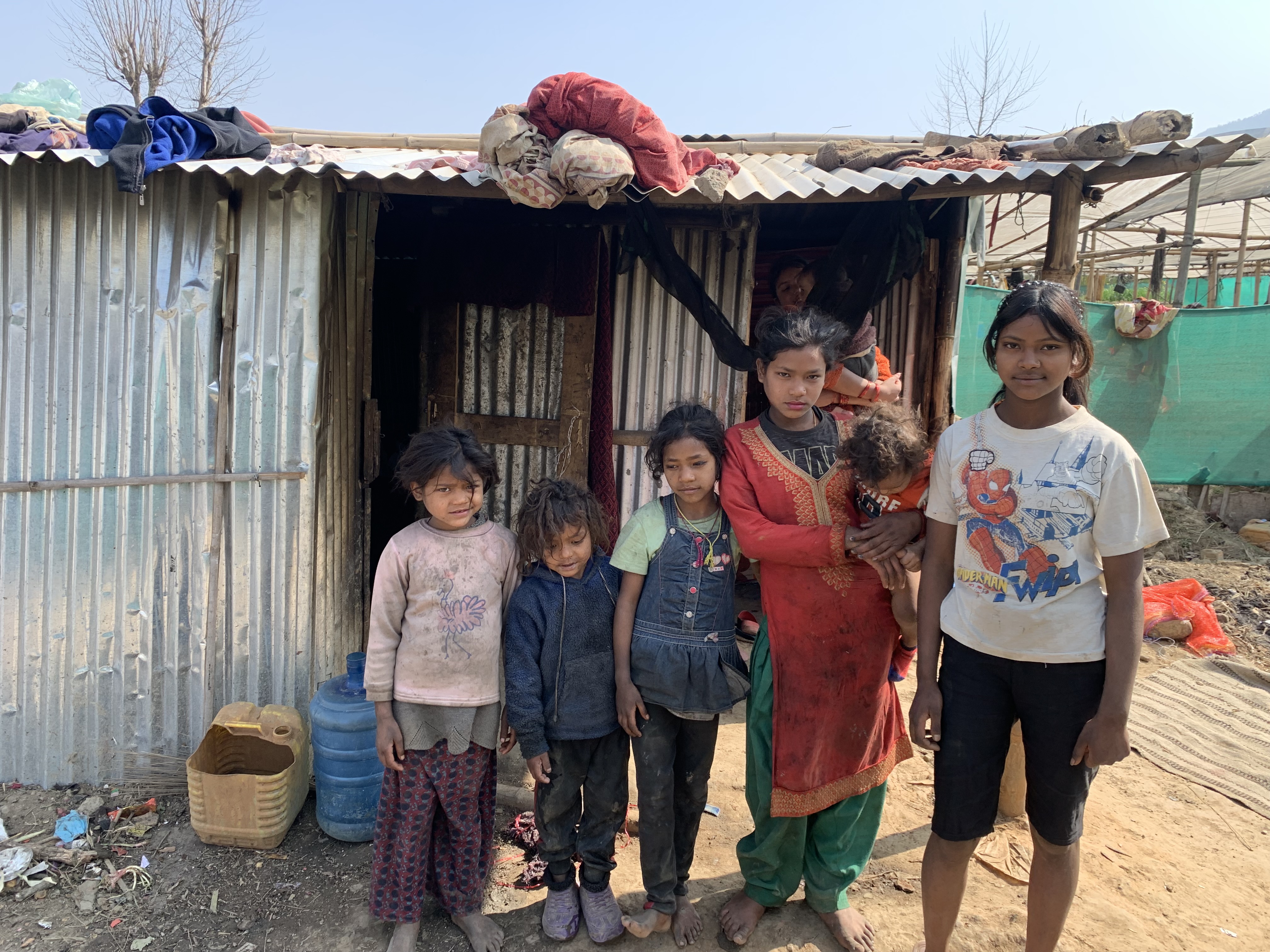
One school, near a large slum area on the outskirts of Kathmandu, teaches a particularly high number of our Kinship Care students. These kids are the children of domestic laborers, factory workers, and others who make do by working important but grueling, thankless, and underpaid jobs because they have no other options. Kinship Care stipends allow these kids to stay in school, well-fed and properly clothed, while remaining in the loving care of their hardworking families.
The school serving these children recently honored NYF with an award for the work we are doing. Before NYF got involved with these communities, kids from this area frequently dropped out of school to help support their families. Schoolteachers described how many of these kids, disillusioned by how impossible it seemed to access any further opportunities, were never able to achieve their tremendous potential.
Now, thanks to Kinship Care stipends, many kids who originally faced similar prospects are becoming engineers, doctors, government employees, agriculturalists, and much more. And they’re bringing some of that success back to their families and greater communities.
2023 Impact Stories: Thank you!
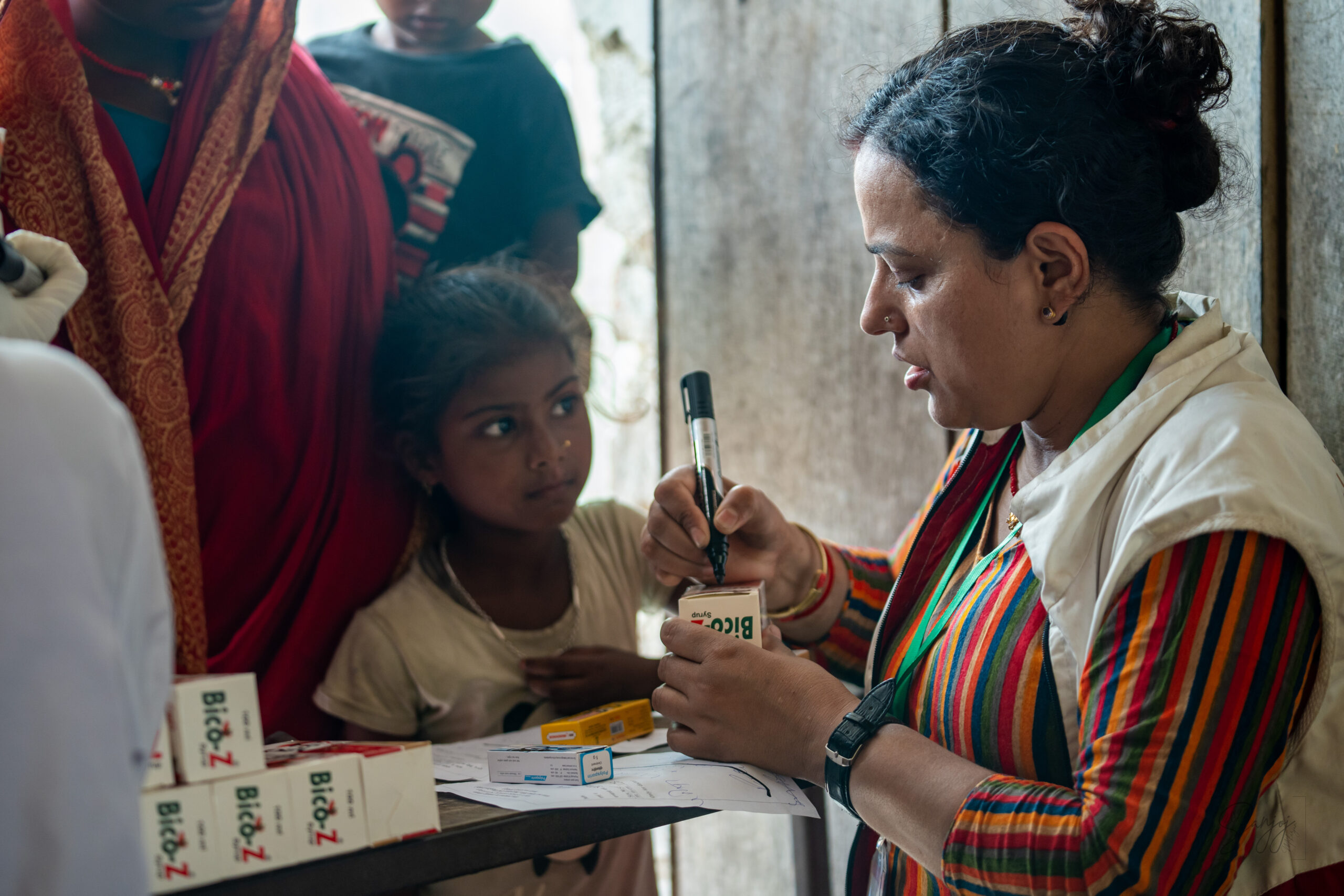
(Above, Caste Equality Project in April 2023) – NYF nurse Radhika Sapkota dispenses multivitamins for children who have completed their check-ups at the Nutrition Outreach Camp. No one in 7-year-old Esha’s* household can read, so Radhika explains the dosage in a bit more detail to Esha’s mother. As she does so, she makes some simplified marks on the vitamin box to help her remember the instructions.
2023 Reflections & Highlights
As we begin the new year, our global team is deeply grateful for everything we accomplished with your support last year:
- In February 2023, NYF celebrated the 25th anniversary of the opening of our flagship Nutritional Rehabilitation Home.
- Our first 16 Educating Dalit Lawyers scholarship recipients officially entered law school. They are impressing their professors with their passion and dedication to the law.
- Over the summer, our nutrition team helped launch the Caste Equality Project in Saptari District. They provided nutritional outreach and care to over 5,000 children and their caregivers.
- In July, Ankur Counseling Center launched a Community Mental Health program to nurture mental wellness and empower individuals to recover from mental health crises.
- Our Kinship Care program is now providing enriched care to keep girls in school, lowering the risk of child marriage.
- We expanded the mission of our New Life Center to offer services to children visiting Kathmandu for critical medical services.
- And thanks to careful observations and learnings from our work during the COVID-19 pandemic, we re-envisioned our Olgapuri Vocational School “satellite” trainings. They are now more impactful than ever in upgrading the standard of living in rural villages.
The above are just a handful of highlights from our work in 2023. And while we’re proud of these accomplishments, we know that the real impact NYF makes are shown in the individuals we work with. So on that note… we wanted to compile and share some of our favorite stories from 2023!
We hope these stories showcase NYF’s love, care, and commitment for the youth and families we work with. We also hope you feel proud of the impact we are making together every day.
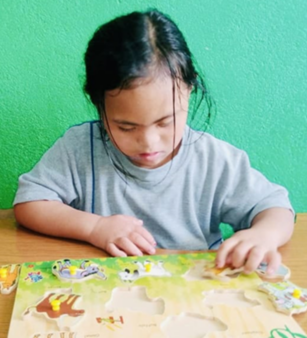
Kriti*
Scholarships for Students with Disabilities
Seven-year-old Kriti* loves puzzles, picture books, and making new friends. But because schools equipped for students with intellectual or developmental disabilities are rare in Nepal, Kriti (who has Down syndrome) has spent most of her life at home, unable to attend classes like the other children she likes to play with.
NYF has offered Scholarships for Students with Disabilities for over 30 years, but until now, these scholarships were limited to students with physical disabilities, like deafness or mobility challenges. This was due to the limited number of safe schools for students like Kriti.
NYF is so pleased that this has changed in recent years. Our team of social workers have assessed several Kathmandu Valley schools for students with special intellectual or developmental needs. Three of these schools have inspired our team’s confidence enough that we have opened the Scholarships for Students with Disabilities
scholarship program to include students living with intellectual disabilities. In 2023, we welcomed 23 such children into this scholarship category!
Our social workers have made valuable connections within these schools, allowing for open dialogue about each student’s needs. NYF is also engaged with the parents of these children, who are tremendously relieved to know that resources are available to help families like theirs provide safe, loving, encouraging educational care for their children.

“NYF … has a philosophy of ‘working themselves out of a job’. Truly unique among NGOs, NYF will choose a mission, will create solutions and then hand off the new model to local people to run. This is not only a very respectful and sustainable model, but it also frees up the organization so they can tackle the next challenge.”
— Sheila, Supporter
Chandra*
Kinship Care
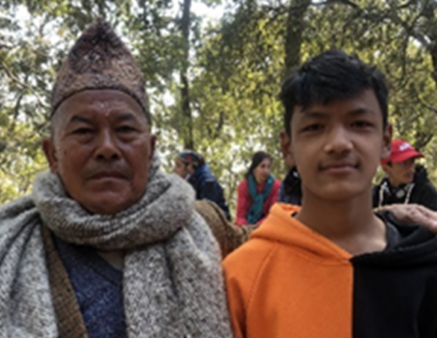
Grandpa, or Hajurba Kumar, is raising Chandra, 14, whose father died in an accident many years ago. Chandra’s mother remarried soon thereafter. Her new husband’s family refused to accept her son into their family, since he was not part of their paternal line.
Chandra’s grandparents stepped in to provide the little boy with a stable home. This allowed their daughter, Chandra’s mother, the opportunity to build a more stable life for herself as well, in a social context that is often extremely challenging for single mothers without the education to support a good-paying career.
Today, Hajurba Kumar, now widowed, is raising Chandra. Chandra is Hajurba Kumar’s pride and joy. The loving, supportive connection between them is warm and strong. This has provided Chandra with a wonderful foundation as he enters his teenage years.
An NYF Kinship Care stipend has kept this family together as Hajurba Kumar ages. Your support is allowing them to prioritize Chandra’s education without worrying about the money required to keep this growing young man properly fed as he enters his voracious teenage years!
Chandra is currently thriving in the 8th grade. He routinely scores in the top five students of his class. He has a great future ahead of him, and we are so grateful to you for making it possible.
“Taking on herculean tasks, NYF has tackled Nepal’s biggest obstacles and continues to drive change. So many lives have been impacted as a result of this work.”
— Andrew, Supporter
Bhagwati*
New Life Center
Bhagwati*, 34, lost her husband several years ago. His death revealed a secret that would drastically impact her life, and the lives of her two young children. He had been living with HIV, and, fearing the devastating social stigma of this diagnosis, had not disclosed his status to anyone, not even Bhagwati.
Soon after his death, Bhagwati began experiencing frightening symptoms of her own. “Weight loss, persistent cough, and difficulty breathing became a part of my daily struggle,” she says. “I visited the hospital, and when the doctors saw the seriousness of my condition, I was referred to a special hospital in Kathmandu.”
In early 2023, Bhagwati was diagnosed with HIV. To her dismay, her youngest son was also found to be living with the virus. She felt as though her entire life was crashing down around her.
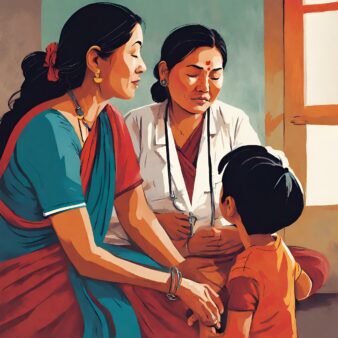
When Bhagwati’s health had stabilized enough for a transfer, the hospital referred her and her son to the New Life Center. There, she would learn techniques for managing her son’s health, as well as her own.
“Our stay at the NLC proved transformative,” Bhagwati says. “Our care was all-encompassing—nutritional meals, essential medications, crucial lab tests, and, most importantly, counselling services to address our emotional well-being. We were discharged after a three-month stay, armed with medicine and a newfound resource when we need it the most.
“Since then, we have been taking our antiretroviral treatment regimen. The journey hasn’t been without its challenges, but we’re not alone. The project staff that had become our pillars of support during our time at the NLC continue to stand by us. Whenever hurdles arise, they’re there, offering guidance and a helping hand.”
(To protect Bhagwati’s privacy, this illustration was created by AI based on photos from the NLC.)
“As a donor, I have been involved with Nepal Youth Foundation for over 15 years and have supported a young girl’s education from high school all the way through medical school. She has become a successful surgeon and is making a contribution to the Nepalese society.”
— Yat-Ping, Donor & Volunteer
Nisha*
College Scholarship Program
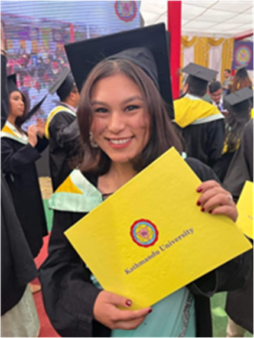
Nisha* was raised in NYF’s care, so our team was deeply proud to witness her receiving her diploma from one of Nepal’s top universities this year!
A bright student with a sparkling presence, Nisha has dreamed of a career in the media for a long time. Her new degree in Media Studies from the School of Arts at Kathmandu University (and her stellar GPA) have already landed her a job in the media department at a travel company, where she’ll gain excellent on-the-job experience.
Someday, Nisha hopes to team up with other young media professionals to make a big difference for communities across Nepal. Thank you for helping Nisha, and many other young people like her, access the education that opens these remarkable opportunities!
We are thrilled to be supporting NYF for such outstanding work they are doing to improve the quality of lives of children in Nepal through education.
— Sunita, Supporter
Pooja*
Vocational Training & Career Counseling (SAAET Project)
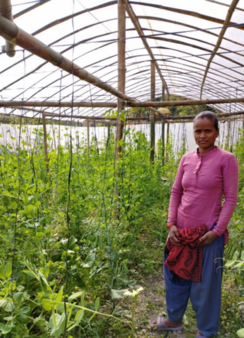
Pooja*, 33, lives with her husband, mother-in-law, and three children. She can’t remember ever having attended school, though she can read Nepali if given enough time to focus. Her family doesn’t have much, relying primarily on daily income her husband earns from taking on daily labor jobs. Pooja had to ask him for money for every basic expense. This caused a great deal of friction in the relationship.
For this reason, Pooja aspired to have an income of her own, to support her children and family and to fulfill her own needs as well. She learned about the SAAET Project from her local women’s co-op group and took part in the October 2022 session.
She constructed her first greenhouse quickly after completing the training session. By late January 2023, she had already sold an entire crop of cauliflower. Encouraged by this success, she added a second greenhouse, where she planted peas and green beans. By spring, Pooja was handling basic household expenses on her own—which transformed her previously-tense relationships with her husband and mother-in-law.
Pooja’s husband realized if he helped with the greenhouses, he could bring in more money for the family than his daily labor did. In strong partnership, he has joined Pooja’s endeavor, and they are now investing some of the year’s profits in a third greenhouse.
“The DH Ross Foundation has made a number of grants to NYF over the last 20 years. We have been consistently impressed by their work providing a range of educational and health and nutrition services to children and youth, and are glad to support their vocational training and health outreach work.”
— Ken, Partnering Organization
Mina* and Rupa*
Olgapuri Children’s Village
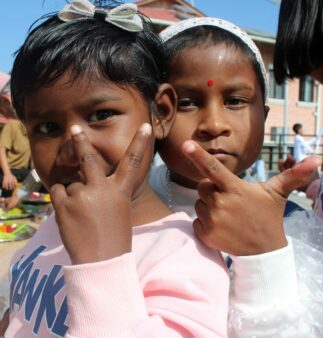
In February 2023, a temporary shelter home referred sisters Mina*, 4, and Rupa*, 3, to Olgapuri Children’s Village.
Mina and Rupa are very close, and very bright. They’re now both attending kindergarten and doing quite well. When they were found by the original shelter, they were determinedly caring for each other the best way they knew how, having been failed by all of the adults in their lives. Our team is thrilled that their days of fending for themselves are over. These sisters deserve a normal, healthy, nurturing childhood—and that’s exactly what they’ll receive at Olgapuri Children’s Village.
Mina and Rupa’s parents married against the wishes of their mother’s family. Their father belonged to a Dalit caste (formerly known as “untouchable”). As a result, their maternal grandparents rejected the entire family.
Family life proved too much of a struggle for the girls’ father, who abandoned the family during the COVID-19 pandemic. Soon thereafter, their mother (who was still rejected by her parents) remarried and started a new life in India with her new husband, leaving her children behind. Even then, Mina and Rupa’s maternal grandparents refused to take them in or even acknowledge them, due to their caste status.
Mina was born with a hearing challenge, and when she arrived at Olgapuri, she was unable to hear or speak. She also hadn’t been exposed to Nepali Sign Language, though she and her younger sister Rupa made good use of a “home sign” language that they developed together organically.
We are amazed at the progress the girls have made. Mina, who is skilled at lipreading, eagerly devoted herself to learning to write in her special-needs kindergarten class. She was awarded first place in her class for handwriting, bringing home a prize of several notebooks, new pencils, pencil sharpeners, and good-quality erasers! The children and house parents at Olgapuri quickly learned how to communicate with her, and they have surrounded her with warmth, kindness, attention, love, support, and safety.
Thanks to a special medical grant from a committed donor, Mina received a cochlear implant over the summer, which is allowing her to hear for the first time. She’s picking up new skills very rapidly and now attends school in the main classroom.
Meanwhile, Rupa—who at age 3 is already her sister’s fiercest advocate—no longer needs to help her sister navigate the world safely. Rupa is enjoying her classes, as well as opportunities to play with other children. She is making connections and relaxing into the stable rhythm of Olgapuri life. She’s experiencing holistic security for the very first time. The girls now have a large, loving family of healthy, attentive adults to meet their needs. And older siblings with ample time and attention to share!
We support NYF because the programs are community-based/grassroots, carried out by Nepali staff (who understand local needs) and are focused on education and health, especially for the benefit of children and young adults.
— Ann, Supporter
Rajendra*
Educating Dalit Lawyers
Rajendra* is from Doti District, a hilly region in far western Nepal. He grew up in a home shared with his parents, two brothers, one sister, and his grandmother.
Overt casteist violence and discrimination were a common occurrence in his hometown. But he also witnessed his neighbors pushing back. Once, he recalls, local police refused to act against a group of casteist young adults who were making a campaign of harassing and abusing Dalit people in the area. Local Dalit families bypassed the local authorities and lodged a case with the district level police. The perpetrators were held accountable and charged a penalty!
Watching this case unfold in real time provided great insight to Rajendra about legal terms and procedures, the importance of law and justice—and ways the law could transform conditions for families and communities like his.
Rajendra was honored to earn an EDL scholarship. He was even more excited when he learned he’d won a seat at National Law College in Kathmandu, one of the best schools in Nepal.
A year into the program, Rajendra is thoroughly enjoying the learning environment at the college. He’s impressed with the quality of the teachers here, and with their teaching methods. When he identifies areas of weakness in his own skill levels, he immediately begins strategizing ways to improve.
Rajendra is tremendously grateful for the Educating Dalit Lawyers scholarship opportunity. He’s looking forward to defending the rights of his community as a fully-fledged lawyer!
“NYF is addressing important big-picture issues in Nepal without losing touch with the individuals they are serving. “
— Anonymous, Donor
Shanta*
Caste Equality Project, Nutrition Outreach Camps, Vocational Training and Career Counseling
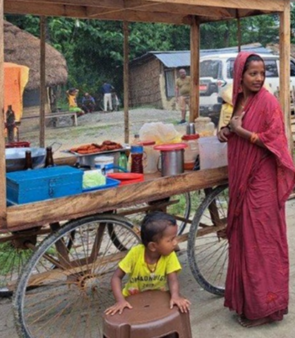
Shanta*, 23, attended one of NYF’s April Nutrition Outreach Camps in Saptari District with her 2-year-old son, Amar. She was very grateful for the opportunity to have her precious son seen by a pediatrician. And she was relieved that NYF was working with local health workers she knew and trusted. Shanta and her family are from the Madhesi Dalit subcaste, so opportunities like these are very rare.
The pediatrician diagnosed Amar with mild malnutrition, but Amar was in otherwise good health. There was no need to refer him to an NRH. Instead, Shanta and Amar sat down with NYF’s nutritionists to discuss practical, affordable strategies to improve the boy’s nutrition at home. During this discussion, Shanta shared details about her background. She had only attended school long enough to write her name and cannot read or write.
She married at age 19. Her husband spends most of the year performing backbreaking migrant labor in Saudi Arabia. Shanta is raising Amar on her own, and she is also responsible for caring for her aging in-laws.
Sending Shanta’s husband and his brother for work in Saudi Arabia was very expensive, and the family incurred a great deal of debt to do so, all in the hopes that the effort would result in better financial stability moving forward. Unfortunately, the investment hasn’t paid off, and Shanta misses her husband terribly.
Shanta has tried to grow wheat and other crops on the tiny plot of land she shares with her in-laws, but the meager earnings from this have never been enough to sustain the family. She frequently goes without meals to ensure her son and her in-laws can eat.
NYF’s Nutrition team made thorough notes during this discussion, and during nutritional counseling sessions with other families. When they returned to Kathmandu Valley, they had a list of early suggestions for Lalit Gahatraj, the CEP Coordinator. Shanta’s story was similar to those shared by many other families. The team suggested that running one of our “Tea & Snacks Shop” trainings in the area would be an impactful start for some of the families we had met.
When NYF announced that they would run an experimental session to assess the effectiveness of these businesses in the region, Shanta signed up eagerly. She completed the training in June 2023. She received her food cart, cooking tools, and other start-up support, and launched her new street food business.
During the first few days, she was already making a profit of 500 rupees per day. This is roughly on par with Nepal’s minimum wage. On big farmer’s market days, she brought in double the money. Amar comes along with his mother and enjoys “quality testing” each batch of snacks. He’s also enjoying a greater variety of fresh vegetables, which Shanta purchases in the markets she works in.
Shanta has quickly developed a sense of her clientele’s preferences, and she is bringing in more income with each month. Her success has been transformative. Soon, she hopes to call her husband back home to Nepal so they can expand this new business and live together as a family. She is confident that together, they can bring in just as much income—if not more—than the wages he is earning in Saudi Arabia.
Support from friends like you make these transformations possible. As we move through 2024, we’re looking forward to the possibilities of the life-affirming transformations in store for the children we serve. Thank you, and dhanyabad!
Staff Spotlight: Laxmi Ghimire
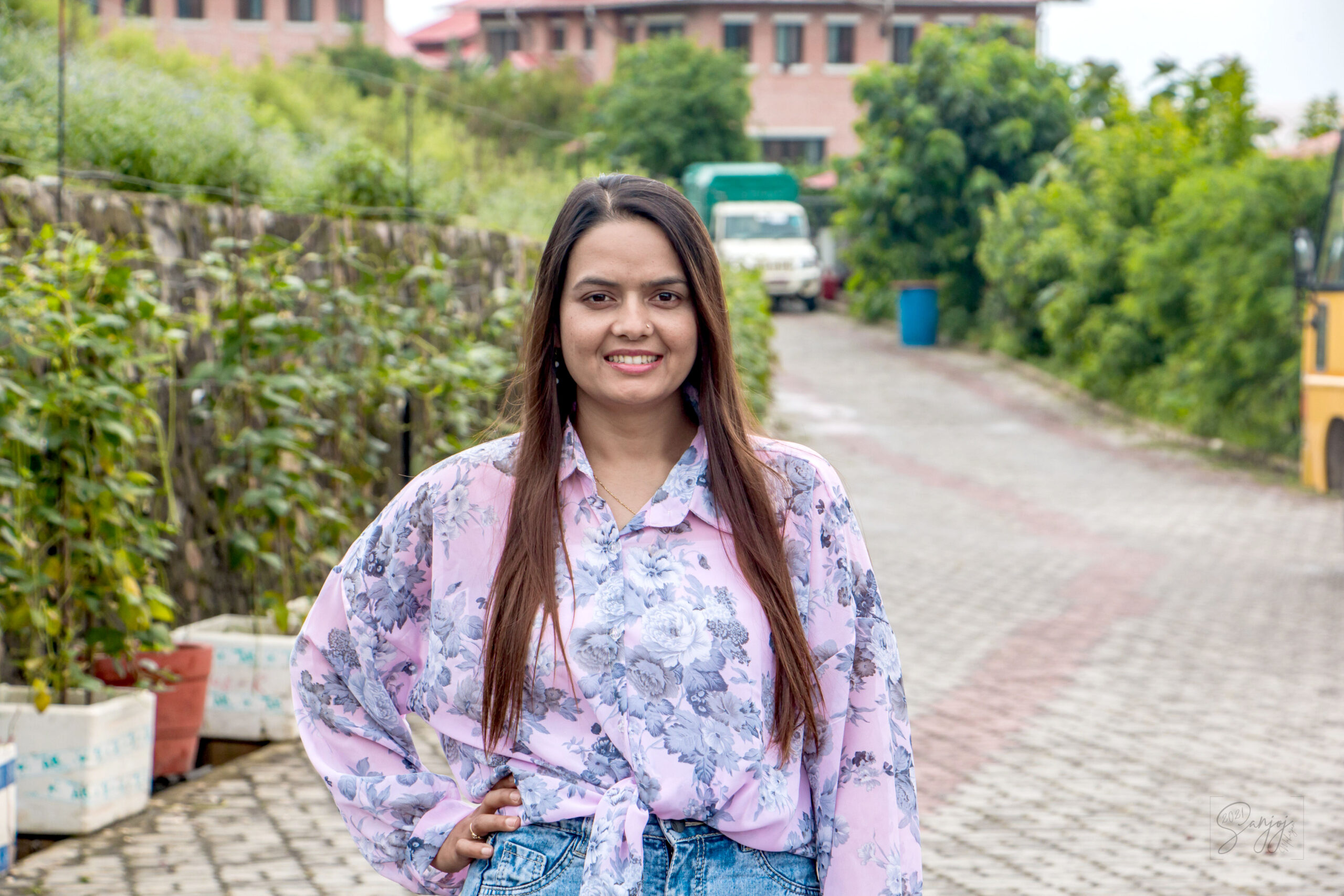
Laxmi Ghimire, NYF’s Career Counselor & VECC Program Manager
Ten years ago, Laxmi Ghimire had a solid job in office administration and HR at a Kathmandu IT company—but the sector just wasn’t the right match. “Every second day I would feel like switching jobs,” she recalls. Her coworkers were very supportive, but, she says, “I was not enjoying it at all.”
Her one favorite part of the position was the Corporate Social Responsibility fund. The company matched one percent of each employee’s salary. This fund provided scholarships to 13 students, including future software engineers. Laxmi helped identify and manage these scholarship recipients. “These students attended a very big university in Nepal,” she says. “They had not even dreamed of that university if the company had not given the scholarship. This was the beautiful part of my job. This was the thing I wanted in my life.”
Laxmi & NYF
Laxmi Ghimire began exploring job opportunities focused on social work, and she sent in an application for an “Associate Career Counselor” position at NYF. Her work and education background made her an incredibly strong candidate, and in July 2014, she joined the Vocational Education & Career Counseling team.
“I took a risk,” she says about swapping careers. “But it was wonderful taking a risk.” Laxmi has been on the NYF team ever since, and she is now both a Career Counselor and the VECC Program Manager. Since joining NYF, Laxmi has pursued additional qualifications, including a Master of Technical Education & Vocational Training degree from Kathmandu University, allowing her to grow her own impact for each of the students she reaches.
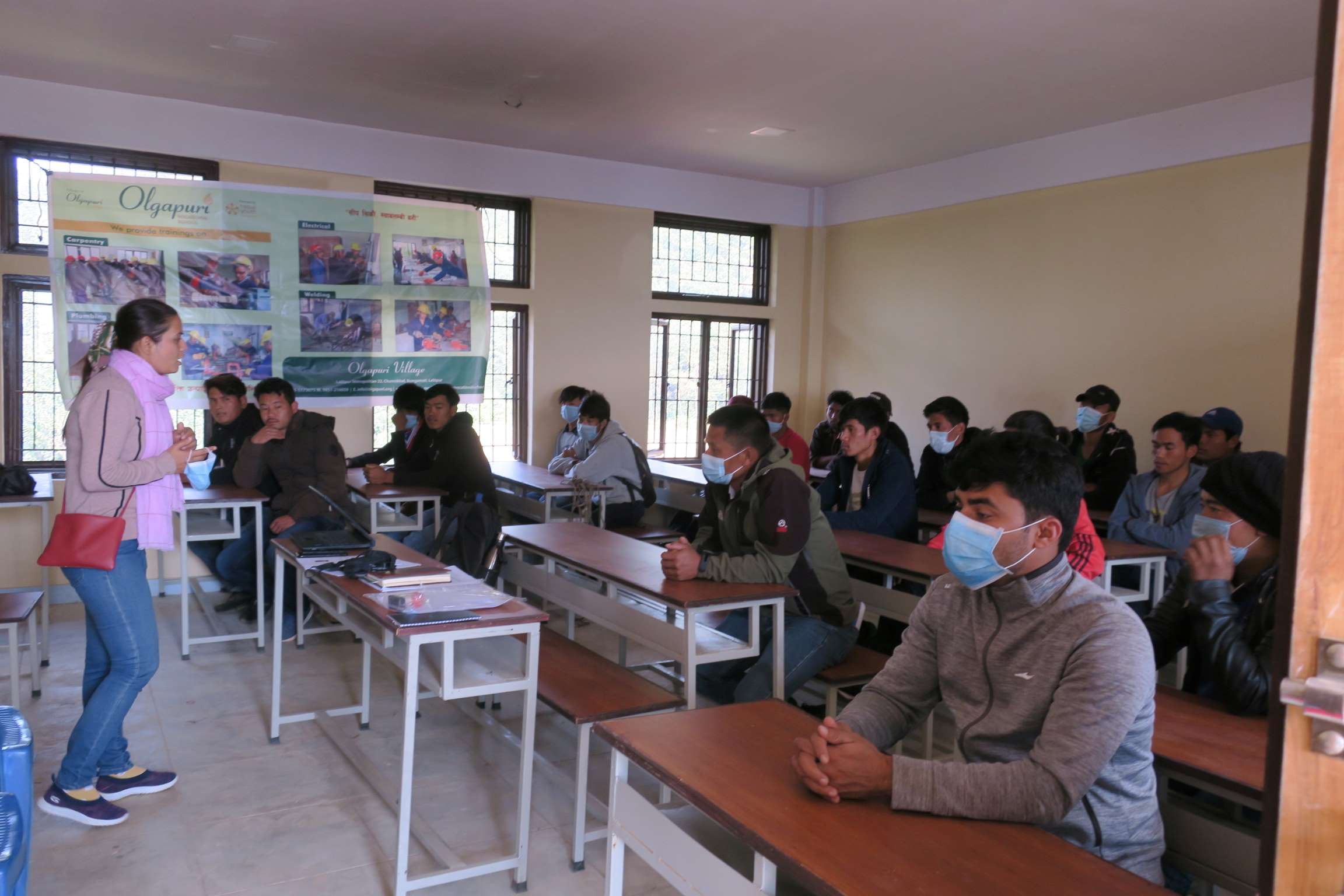
Laxmi matches young adults with career paths that allow them to reach their unique goals. Her work emphasizes technical education programs, but sometimes these programs are stepping-stones for students in special circumstances.
Jivan’s Journey
She shares one memorable example of a young man named Jivan*, who came from a hilly region in western Nepal where the terrain made agricultural work so difficult that most young men took migrant labor jobs in India or Saudi Arabia. Jivan wanted a career in government, to improve conditions for villages like his. So he put himself all the way through a master’s degree in sociology—and then was devastated when he was unable to find any job at all.
Jivan eventually accepted a teaching job near his village, where he was paid less than $80 a month. His relatives, neighbors, and peers pressured him to seek a higher-paying job abroad, so he became a migrant laborer in Saudi Arabia. Conditions were terrible. After two years with no improvement in sight, unable to meet his basic expenses, and profoundly homesick, he reached a point where he preferred being unemployed in Nepal than remaining stuck where he was.
Jivan meets Laxmi at Olgapuri Vocational School
Fortunately, soon after returning to Nepal he attended an Olgapuri Vocational School presentation in his area. Jivan connected with Laxmi for a career counselling session. He thought if he completed a vocational training course, he’d at least be able to take on skilled work, even if he wasn’t using his degree.
Jivan completed the three-month Olgapuri Vocational School (see page on Facebook) electrical course and quickly found a solid job in Kathmandu earning enough to cover not only his basic expenses and support for his family, but also the tuition for a government prep course that he hoped would finally open the door to his dream.
He worked hard for 11 months, performing electrical work full-time by day and attending evening classes. Then, Jivan sat for his government exam—and passed. He is now working at the officer level in the Nepali government. His nontraditional career path has provided him with a wealth of experiences that help him understand the plight of so many others throughout his country, and he’s a better representative because of it.
Laxmi admits that this impact story is unusual. Most of the young adults she works with stick with their new vocational trade, building thriving small businesses in their home villages, establishing themselves in a 9-5 job in one of Nepal’s cities, or using their new skill as an extra source of income when they’re not needed on the family farm. No matter what path each graduate takes, the positive impact on their life trajectory far exceeds the cost of the training.
“We see thousands of lives transforming,” Laxmi says. “Very small things, very small contributions we do, and their life transforms. This really brings goosebumps within us.”
Challenge & Opportunity
During the height of the COVID-19 pandemic, Laxmi and her team had to think creatively to continue offering technical education opportunities during lockdown. They finally decided to try taking Olgapuri Vocational School trainings outside of Kathmandu, with trainers isolating in rural villages and then offering the three-month courses to local young adults. This new approach to vocational training was much more successful than anyone at NYF expected.
“And now I would say this pandemic has created an opportunity,” Laxmi explains. “[These students] never would have gotten access if we were only limited to Olgapuri. And now because we were not limited to Olgapuri, many people have access to that training. That was the challenge as well as the opportunity during the pandemic.”
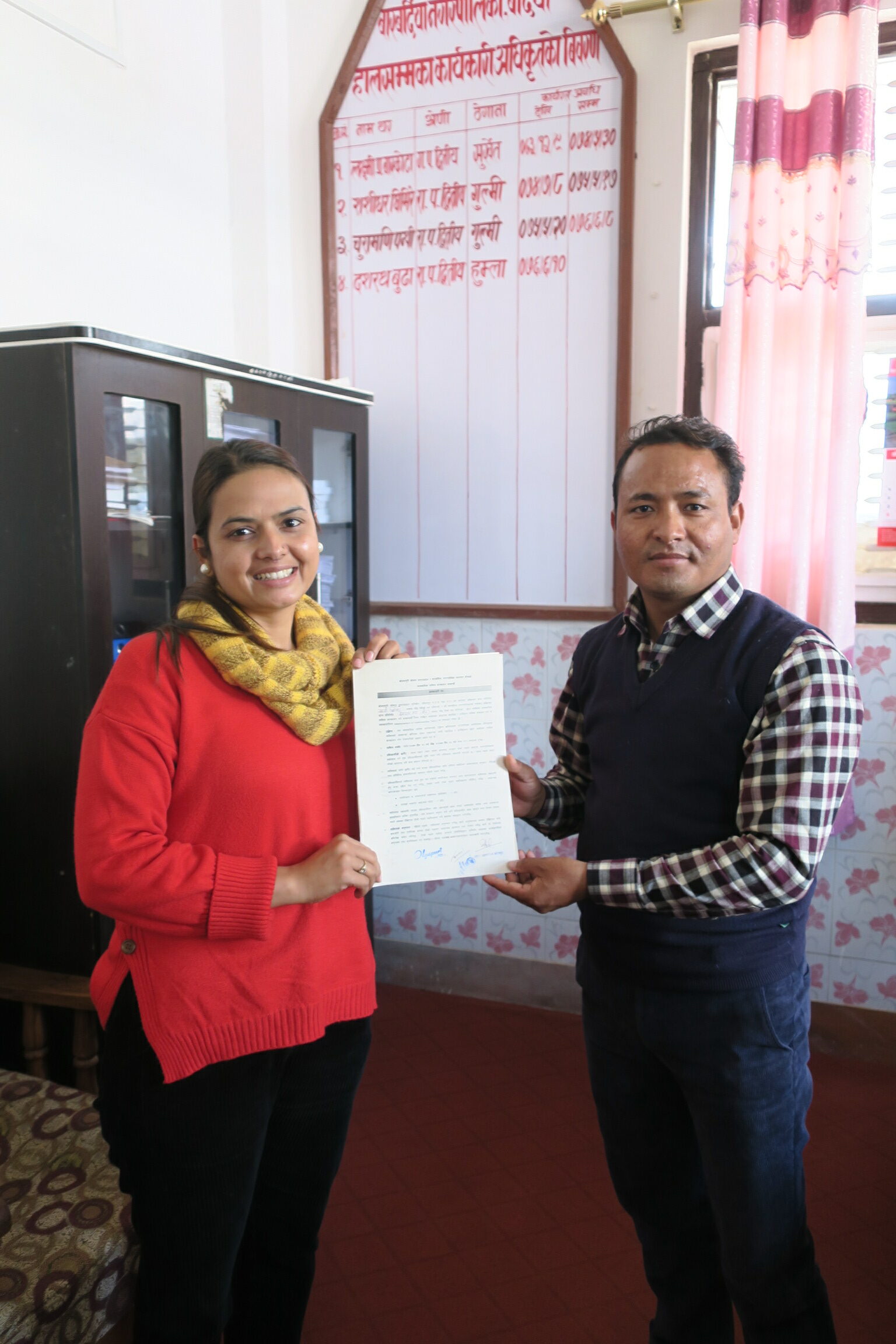
There’s now a waiting list of rural municipalities hoping to bring NYF vocational training courses to their areas. “Satellite” plumbing and electrical trainings are in especially high demand. The presence of locally based plumbers and electricians instantly makes both amenities much more affordable and accessible to these communities, drastically improving the quality of life for everyone living nearby.
Laxmi is excited about the potential for expansion in this area. Many young adults in Nepal aren’t aware of how lucrative technical careers can be, believing their only options are college, subsistence farming, or migrant labor.
Beyond Satisfaction
For Laxmi, there’s special joy in watching prospective students begin connecting the dots between one of our three-month courses and the potential to build forward with power. During orientation presentations, she scans the crowd for “hopeful eyes”—that moment it dawns on someone that they’ve found a viable, expansive path.
“When they come to the training, they come with lots of dreams,” she says. “It’s a short-term training, but they come with big dreams. That’s a wonderful part of my job. That is the best part, I think.”
Laxmi Ghimire wishes all of NYF’s generous supporters could witness each of these transformations the way she does. “Just a small donation makes a big transformation,” she says. “A big change in somebody’s life. It’s something beyond satisfaction.”
Industrial Tailoring at Olgapuri Vocational School
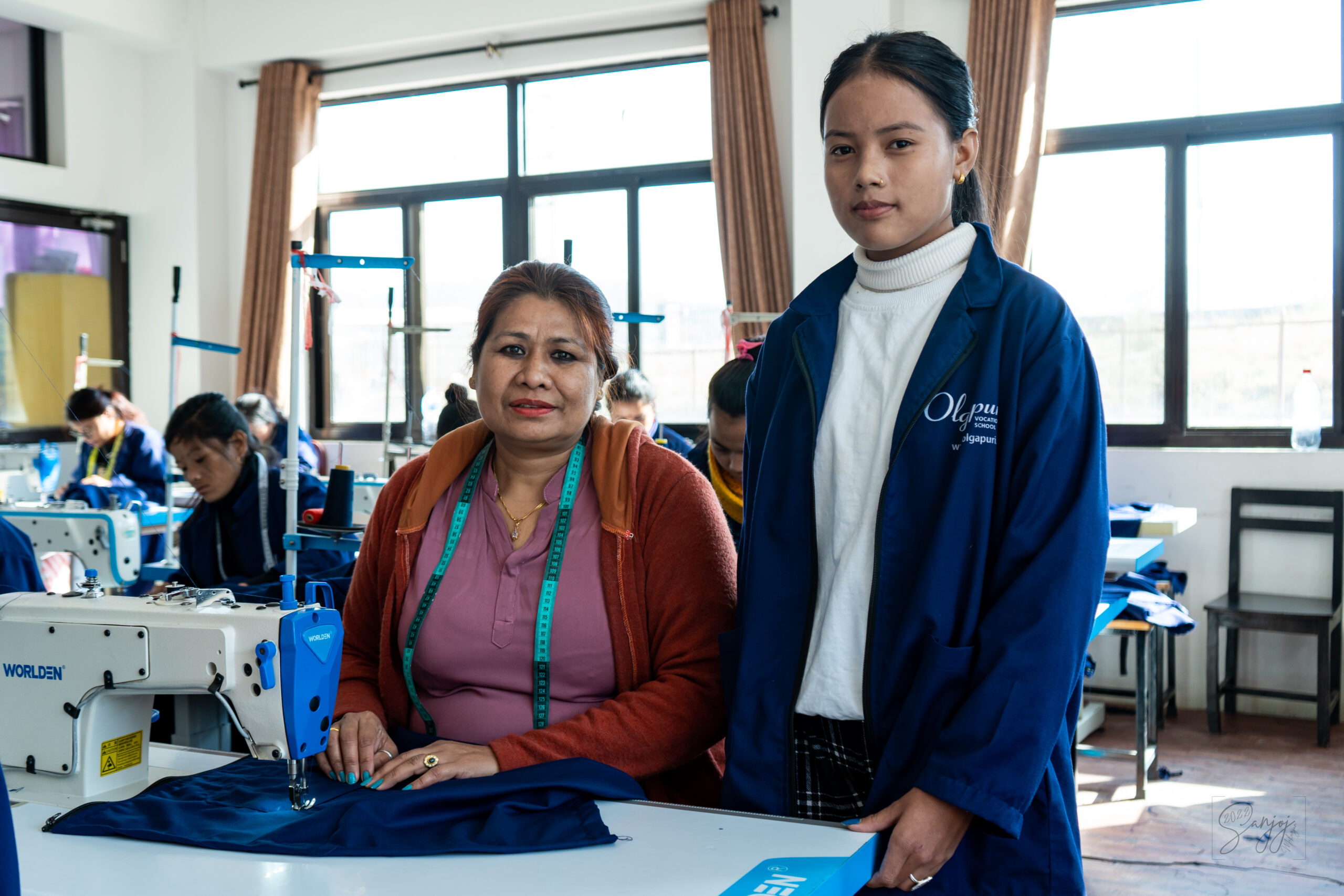
Industrial Tailoring has quickly become one of Olgapuri Vocational School’s most popular courses for women. The average monthly wage for our graduates is 30,000 rupees per month ($260), with room to grow. Those with more experience are making as much as 45,000 rupees ($390)—over three times Nepal’s minimum wage!
Over the past year, our team has had conversations with uneasy supporters about our new Industrial Tailoring vocational training course, which is held exclusively for women.
We’re hearing two main concerns:
- “Sewing is traditionally undervalued as ‘women’s work’. Shouldn’t we be trying to encourage young women to break free of these sorts of industries, rather than continuing this pattern?”
- “Isn’t the garment / textile industry particularly dangerous and exploitative? I don’t want my donations to go towards placing these bright young women into sweatshops!”
Maybe you’ve had similar concerns! In fact, people on the global team and on the board have discussed these same worries. At NYF, we deeply appreciate how thoughtful our supporters are, and how engaged you are in looking out for the children and youth we serve.
Our Commitment to Women’s Empowerment
First and foremost, our global team is committed to empowering women to follow their dreams. This is especially the case when their options are limited because of entrenched gender roles and hierarchies. We believe every girl and every woman should be free and safe to choose her own destiny!
We’re also appalled by the conditions within many of the world’s factories—not just garment factories. No one on our team wants to see any one of our beneficiaries trapped in an oppressive, unsafe working environment.
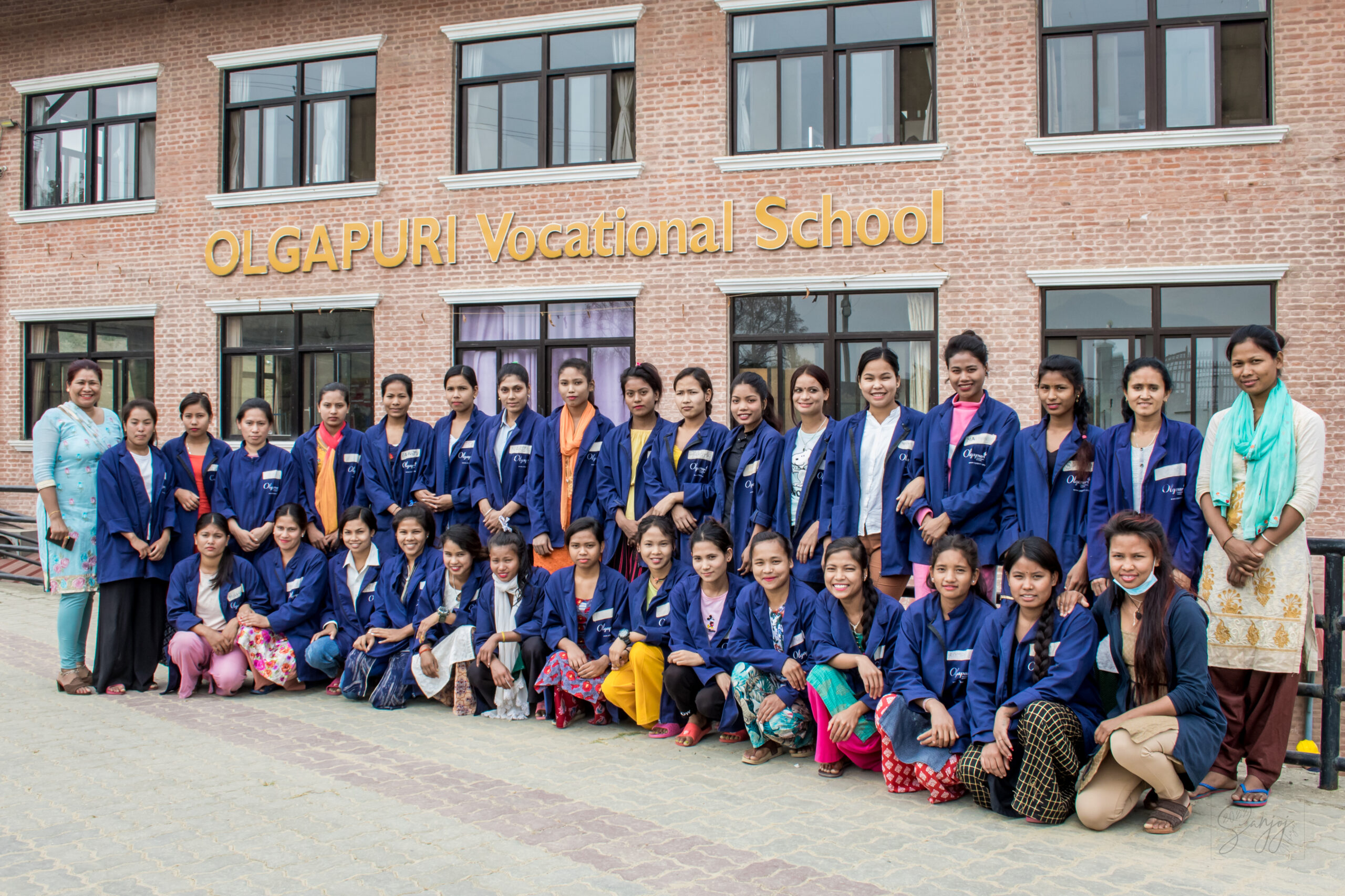
All Olgapuri Vocational School courses are openly advertised as available for all genders. At the orientation presentations where young people are given application options, women are always strongly encouraged to apply. Some of the instructors for these courses are women, giving potential students clear evidence that women are welcome.
However, despite all this, NYF has struggled to interest young women in signing up for these opportunities. As a result, enrollment in these programs is overwhelmingly male (a staggering 90%).
Our team has been working for several years to understand this phenomenon and to provide good solutions. Young women know they are welcome to apply for these courses in male-dominated career fields.
But many of these young women still don’t feel safe in those industries.
NYF can place female construction graduates in positions where we know they will be hired, paid equitably, and respected by their employers. Unfortunately, we can’t guarantee that they will not experience sexual harassment and other sexist aggression in the workplace.
Many young women don’t want to walk that challenging path, even if it pays more. They just want to make a decent living, gaining personal economic freedom without entering a career where conditions simply won’t feel safe for them as women. We can’t fault them for that.
Former Kamlaris Propose Industrial Tailoring Course
Olgapuri Vocational School’s Industrial Tailoring course was proposed by a group of former kamlaris. This initial group of young women met one another in a women’s empowerment group run by the Former Kamlaris Development Forum (FKDF). (The FKDF is a community-based nonprofit NYF helped found in the Tharu communities impacted by the traditional kamlari practice.)
In a group discussion, several of these women shared that they wished NYF offered a course in Industrial Tailoring. It seemed strange to them that this course wasn’t available. After all, they reasoned: clothing is one of Nepal’s biggest exports, and the job market in this area is growing. Careers in this field are stable, well-paying, and have room for growth and flexibility.
Even knowing that women were encouraged to apply for the construction training programs, some of these women almost felt left out by OVS because we weren’t offering trainings in the career fields most likely to attract female engagement.
The freedom to choose among a set of only male-dominated options just didn’t feel like real freedom.
Fortunately, these empowered young women knew they could ask NYF directly about such an option. They also had a growing group of women behind them who all agreed they’d leap at the chance to earn their certifications in Industrial Tailoring.
When this group approached NYF, our team let them know the common concerns about workplace dangers in the garment industry. The young women responded that construction trades are also dangerous. They all knew someone who had experienced an electrical accident or been injured by a power tool. And as far as exploitation was concerned, these young women had already survived kamlari bondage. They know better than most that bad actors exist in all industries.
Thanks to NYF and the FKDF, though, they also possess the extraordinary inner tools that empower them to defend themselves from exploitation—and motivate them to defend their sisters as well.
Their request was so powerful and enthusiastic that our team had to find a way to provide this opportunity.
The Curriculum
NYF’s team made connections with local high-quality garment factories known for their fair practices and safe working conditions. They asked for their guidance in creating an ideal classroom and for help developing a specialized curriculum. These experts shared a list of skills all their employees needed to master, as well as a list of “dream skills” that made tailors especially competitive in the workforce.
Being highly skilled in a trade is a major safeguard against exploitation in any industry. This is because it allows workers the flexibility to seek out better workplaces without risking financial ruin.
Our team designed a six-month course which would prepare trainees to create high-quality garments for local consumption as well as for international export. Importantly, the training also includes the information needed for a student to establish her own small clothing business.
The curriculum covers industrial machine operation and maintenance, different kinds of stitches and their uses, measurement skills, fabric types and their uses, clothing design principles, and how to take items from printed designs to fabric cutting to assembly and through to the finishing touches. Safety is always an important topic as well.
Trainees are given specialized life skills and group therapy sessions (and, where needed, personal therapy as well) through NYF’s Ankur Counseling Center.
They also participate in motivational sessions on women’s empowerment!
During the entire six-month course, trainees live in the Olgapuri Girls’ Hostel. This is a space created especially for young women in vocational training courses (many of whom are not familiar with city life) so they can feel safe and secure during their training.
The first four months of the training consist of classroom instruction, followed by two months of paid On-the-Job training in one of the city’s high-quality factories. This is a paid apprenticeship period, with pay being nearly double Nepal’s minimum wage.
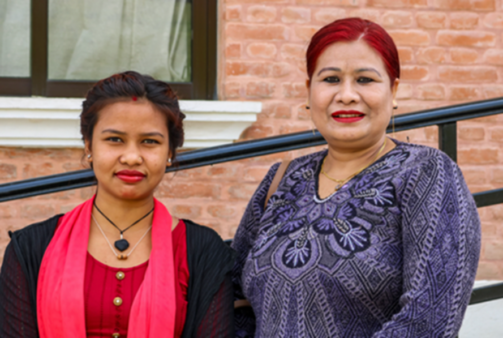
Meena Kumari Chaudhary (left, Asst. Trainer) is a former kamlari—and she was also one of the earliest graduates of our Industrial Training program! She’s thrilled to be using the skills she learned here to empower more women to enter this growth industry.
Here, she is pictured with Lead Trainer Anju Thapa. Both women have become role models for the young women hoping to build a sustainable career in tailoring!
Workplace Safety
Unfortunately, sweatshops do exist in Nepal. These cramped factories regularly ignore laws and regulations, have extremely poor and unsafe working conditions, and have unscrupulous bosses who demand inhumane working hours and withhold pay. NYF would never partner with these organizations, let alone intentionally place a trainee in such a working environment.
Kathmandu is also home to factories where workers are treated fairly, paid well, and conduct their work in well-lit, airy spaces that are kept tidy, with wide paths for evacuating in an emergency, ensuring safety for everyone. These are the workplaces our graduates enter, as a group of empowered women determined to build their futures—and continue working towards a more equitable world.
Bindu’s Story
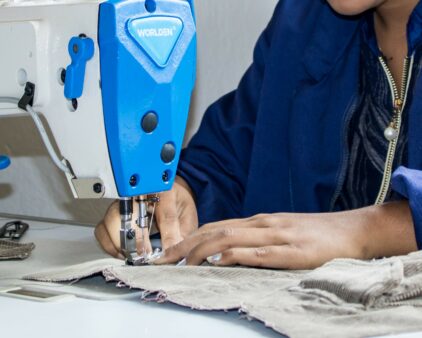
Bindu* has survived horrific ordeals over the past two years. During the COVID pandemic, she started dating an older man, against her parents’ wishes. Soon, this man convinced her to run away with him to start a new life in India. Dreaming of a beautiful future, Bindu followed him across the border. Bindu quickly learned that the man’s intention all along had been to traffic her.
Betrayed and heartbroken, Bindu relied on her inner strength to survive her situation—and she somehow managed to escape her captor and return to Nepal.
But the nightmare wasn’t over. When Bindu finally reached her home village, her parents rejected and disowned her.
Fortunately, Bindu found an organization working with women who have survived sex trafficking, and they helped her file a case against the man who trafficked her. Thanks to Bindu’s courage, he’s now in prison, where he can’t hurt any more girls and women.
Bindu found housing in a women’s shelter in Kathmandu as she prepared for her next steps. One of the staff members there heard about NYF’s new Industrial Tailoring program—and immediately thought of Bindu.
Bindu has taken to the Industrial Tailoring skillset extraordinarily well. For the first time since she ran away from home with a heart full of hope, Bindu feels like her dreams are truly within reach.
“I never thought I’d be able to acquire a skill that would pay me this much,” she says, adding, “Economic independence is very important to me, as I have no family to support me. The work environment is also safe and pleasant. The other girls and women that I work with have become like my family—and my greatest support system. I feel very fortunate to have had the opportunity to meet them and work with them.”
A long waiting list…
In the first year of its existence, the Industrial Tailoring course quickly became one of OVS’s most sought-after options. Our team has already trained 149 women—and there’s a long waiting list. Most of these women are former kamlaris from western Nepal, but we’ve also received numerous referrals from Kathmandu women’s shelters and other aid organizations. This training has already empowered single mothers, survivors of domestic violence and sexual abuse, and women who have escaped trafficking.
We are so grateful for the support that allows us to offer these women this remarkable opportunity. We hope to be able to continue offering it as long as young women are interested.
The Empowering Freed Kamlaris program is one of NYF’s greatest achievements. For more information on the former kamlaris and the FKDF, please visit https://nyf.news/efk
World Cup Qatar 2022: The Need for Vocational Training in Nepal

World Cup Qatar 2022 is the first World Cup to be held in the Middle East—and only the second to be held entirely in Asia. This global sports tournament should be a time of great celebration and unity.
Unfortunately, as fans across the world tune in to cheer for their favorite teams, a much less joyful story has come to light. That story is about the thousands of migrant workers from places like India, Pakistan, Bangladesh, and Nepal who built the World Cup 2022 stadiums and other infrastructure necessary for Qatar to host this massive event.
These migrant workers have recounted stories of horrific working and living conditions—and many have died. (We have compiled a list of news stories below.)
Most of the stories we’re seeing published in the west place the blame on Qatar—as though without the World Cup, these migrant workers would never have been in such a situation.
Unfortunately, the truth is that the World Cup has only shined a light on a long-term, widespread problem impacting these communities.
Youth underemployment in Nepal hovers around 35%, with many young people unable to access the skills training or other resources necessary to make a living in their own communities. Many of these young people have no choice but to take migrant labor jobs abroad, sending money home to their families as often as they can.
Conditions for these workers are brutal: long hours performing dangerous, back-breaking work for low wages. Many report that their passports are kept by their employers, preventing them from returning home on their own if they wish. Health care options are effectively non-existent. Unfortunately, many Nepalis in this situation pass away or become seriously injured—and their selfless efforts to create a better life for their children leave them worse-off than when they began. The death toll among migrant workers from Nepal has been steadily increasing for years—and the majority of these deaths are not happening in Qatar.
This has been the reality for millions of Nepali young people long before Qatar began designing their World Cup stadiums. And it will continue after the World Cup has ended.
At NYF, we believe that the best way to end this cycle isn’t by focusing on conditions in Qatar and other countries that rely on migrant labor. Rather, it’s by creating better working opportunities at home in Nepal (and other home countries!).
This approach allows individual young people to access lucrative careers close to home, creating opportunities for economic and infrastructure growth in their own communities. NYF’s Vocational Education & Career Counseling programs and Olgapuri Vocational School were designed to provide exactly this kind of alternative for young Nepalis.
Here are just a few stories that illustrate the impact of these programs!
Sustainable Agricultural and Entrepreneurship Training
Kalpana got married soon after she was freed from kamlari bondage. She settled with her husband’s family on their small plot of rented land. They have five children, and were eager to give them the best opportunities possible.
Her husband considered taking a job overseas to make extra money, but he and Kalpana were both anxious about this option. When Kalpana heard about NYF’s one-month SAAET Project, she signed up right away, participating in the November 2021 course.
Immediately after the training, in December, she enlisted her husband to help her construct their first greenhouse. They started planting off-season vegetables on their land, and success was immediate.
Kalpana is now growing highly marketable tomatoes, bitter gourd, cucumbers, pumpkins, and cauliflower. She is currently making a profit of 20,000 Nepali rupees per month (minimum wage in Nepal is 13,450 rupees per month, or $115).
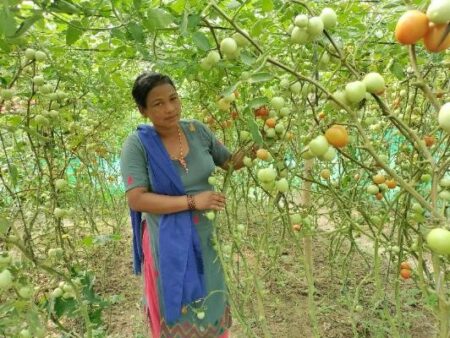
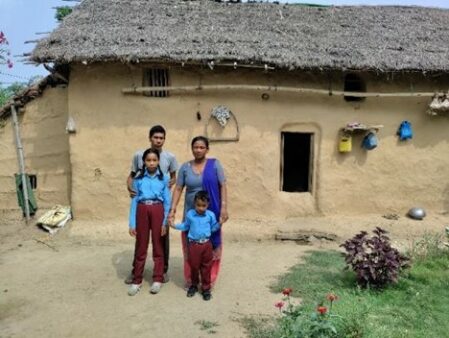
This school year, Kalpana used some of her profits to register her two school-aged children in a private school. “The economic independence I’m gaining from greenhouse farming has made me confident in every aspect,” she says proudly.
Though some programs are designed especially for women, we’ve found that our entrepreneurial graduates often enlist the help of their husbands when launching their new businesses. Not only does this maximize their effectiveness and profits—it creates jobs in the home community, allowing families to build financial success as a team!
OVS Construction: Carpentry
Ashok, 20, grew up in Dolakha District with his family of five. They depend on subsistence farming for their livelihood—an extremely tough lifestyle in mountainous regions.
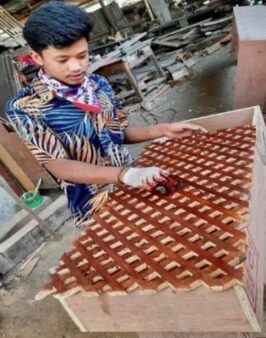
Ashok is a smart, fastidious young man with strong attention to detail. He knew he was capable of providing much more for his family than farming allowed, and he dreamed of living somewhere outside of his village. But without access to training or apprenticeship opportunities, and no money for traveling to a vocational school, he wasn’t sure how to kickstart a new career.
In early 2022, Ashok heard about a career orientation presentation being offered by NYF in a nearby village. Curious, he attended. He was shocked to hear that the program was free for eligible young adults—including travel and room and board during the three-month course!
Ashok submitted an application for the Carpentry Training course and was placed in the March 2022 session on Olgapuri Campus.
After receiving his certification three months later, Ashok worked as a paid apprentice at a large furniture house in Kathmandu. His performance there was so impressive that the employer offered him a full-time job in June. Ashok is making around $225 per month—nearly twice Nepal’s minimum wage. He’s sending much of it home to support his family.
With his highly-valued skills, Ashok has the ability to shift jobs at will without ever leaving Nepal. He considers this NYF training to be the most important milestone of his career to date!
OVS Construction: Plumbing
Reeta*, 25, lives in a hilly region in western Nepal with her husband. One day, while the COVID pandemic was ongoing, Reeta learned that an Olgapuri Vocational School “satellite” plumbing training program was coming to their area. She signed up for the program right away, but her husband wasn’t so sure. He, like many others, considered plumbing to be a man’s job.
When Reeta mentioned this domestic push-back in class, NYF plumbing trainer Sailesh Khatri offered to meet with Reeta’s husband to talk about his concerns. Though Reeta’s husband was uncomfortable at first, he was willing to listen as Sailesh explained the special value of a skilled trade for a woman. Besides, Sailesh added, Reeta was showing a real knack for the work!
Eventually, Reeta’s husband decided to wait and see what happened once Reeta was certified. He didn’t need to wait long before realizing that Reeta and Sailesh were right.
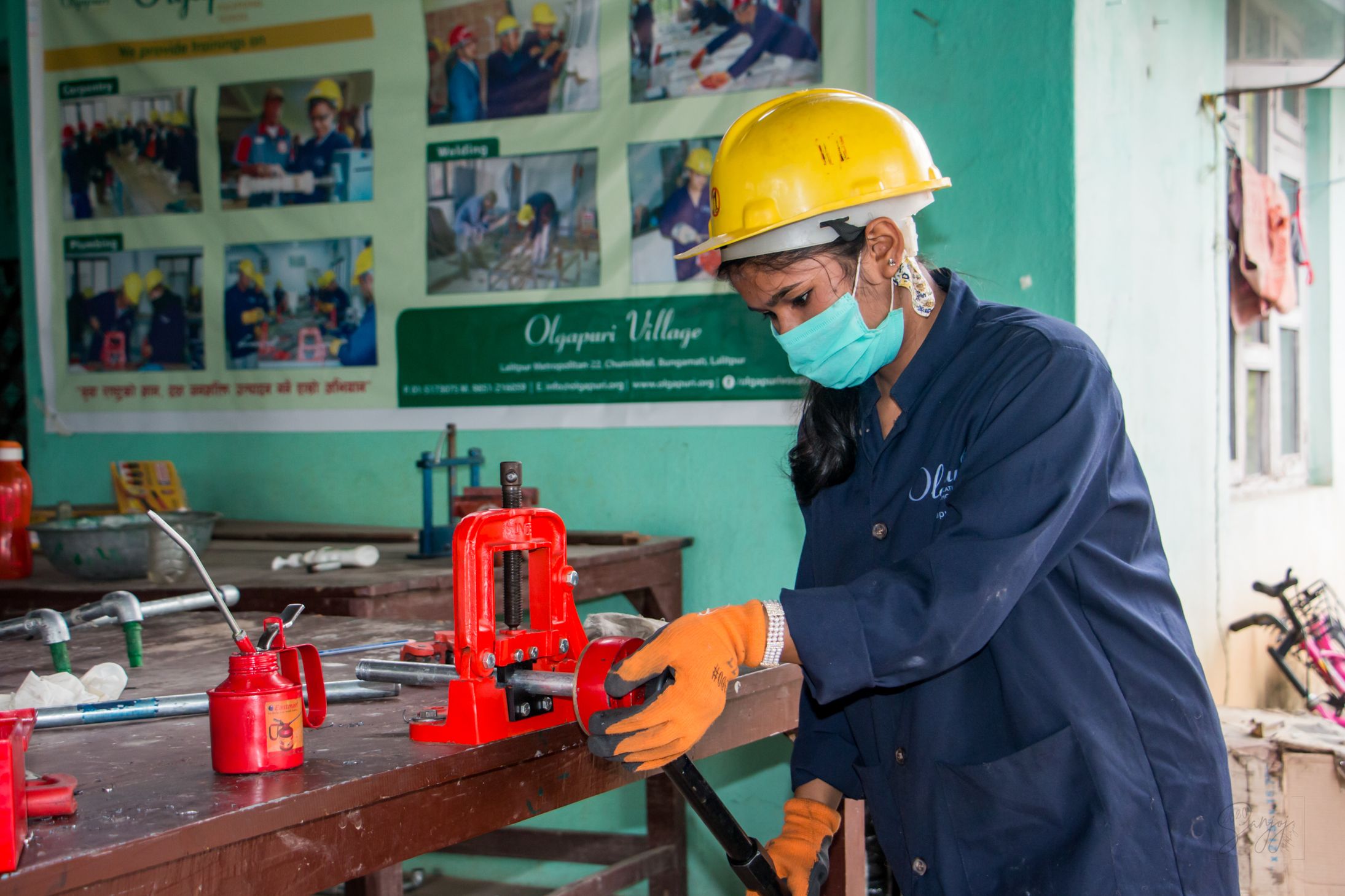
After completing the program in February 2021, Reeta was hired as an on-call technician for a major government project. She is responsible for all the plumbing repair in her village and is paid accordingly!
We’re especially proud of the community-wide impact our plumbing program is having in rural communities. For more on this, check out a story we shared in April 2022.
World Cup Qatar 2022 Highlights Opportunities for Growth
Working grueling overseas migrant jobs isn’t just physically demanding. It’s incredibly lonely. It’s discouraging to build marvelous infrastructure for strangers when family members back home don’t have access to such luxuries. Because of the ways they are treated, migrant workers also often feel isolated, unknown, and even disposable.
When following up with NYF’s young vocational training graduates, many of them report great pride and satisfaction about working within their own communities. Vocational training programs like ours are transforming individual lives. They are also improving entire villages in the process—not only in a physical sense, but in an emotional and psychological sense as well.
Let’s make sure the lessons learned during World Cup Qatar 2022 lead into more empowering opportunities for young adults in Nepal. Your donation today will help us continue offering these incredible courses to young people throughout Nepal.
Learn more about the workers behind World Cup Qatar 2022
- Human Rights Watch – FIFA/Qatar: Migrant Workers Call for Compensation for Abuses
- The Washington Post – Families of migrant workers who died in Qatar are waiting for answers
- The New York Times – The World Cup’s Forgotten Team
- Reuters – In a stadium of their own, migrant workers say their sweat made World Cup happen
- CBS News – Qatar acknowledges “between 400 and 500” workers died preparing for World Cup
- PBS News Hour – Migrant workers recount abuse while building stadiums for World Cup in Qatar
- BBC News – Qatar World Cup: Families seek answers over migrant worker deaths
NYF’s partnership with One Day’s Wages: A successful Vocational Education project!
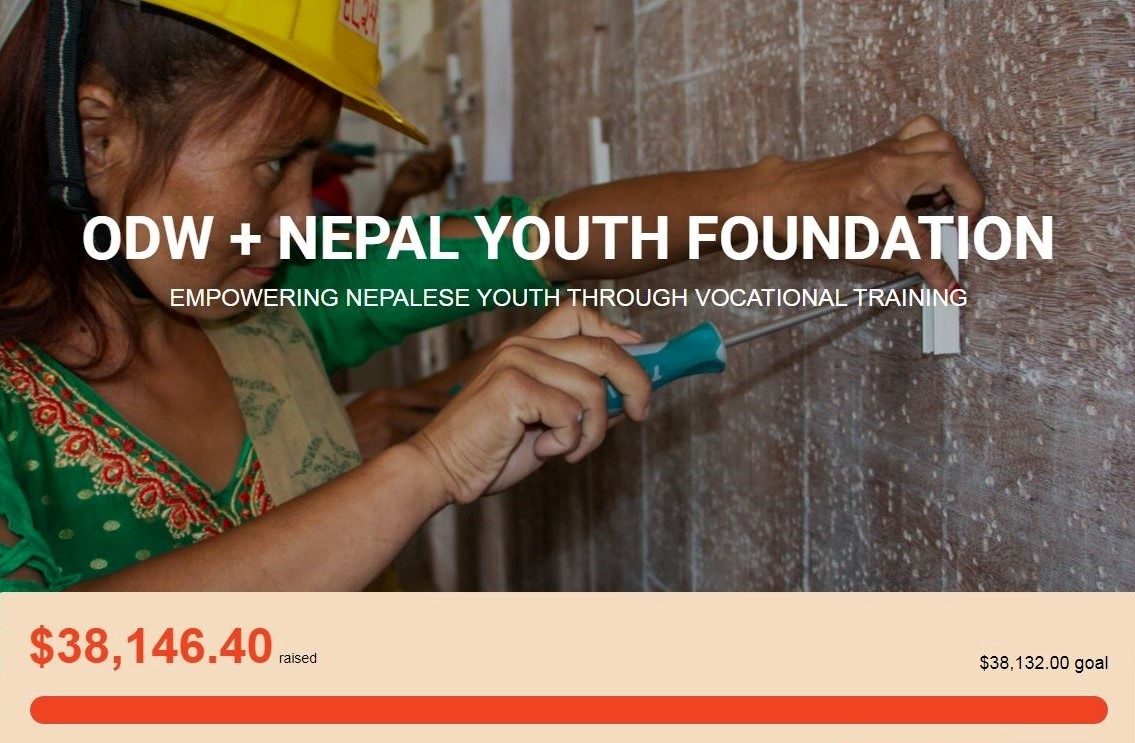
In late 2019, NYF launched a matching campaign with One Day’s Wages to fund 52 students in our Vocational Education & Career Counseling program. Thanks to support from friends like you, we were able to meet our fundraising goal— and we received a generous matching grant from One Day’s Wages to complete this project in 2020.
Though the pandemic caused a delay in starting and completing this vocational education project, we are happy to finally share how successful it ended up being. We are also incredibly grateful for the One Day’s Wages team for being so patient, flexible, and encouraging while working with us on this project as we navigated COVID-19.
The Vocational Education Training Course
This project funded a 12-week training course for 52 students in our Olgapuri Vocational School training program. 31 of these students graduated from the electrical course in Barbardiya Municipality, and 21 from the plumbing course in Bhanu Municipality.
Our original plans were to invite our students from multiple regions in Nepal to Olgapuri Vocational School in Kathmandu. However, NYF had to shift the program to a satellite model due to COVID-19. In this new set-up, our incredible teachers transported their equipment to villages in Barbardiya and Bhanu Municipalities to self-isolate before teaching the twelve-week course to local young adults. These satellite trainings were successful and eagerly received by individual students and communities. As a result, we are working to identify ways to make them a part of our regular programming.
During the training, our students received hands-on instruction and practice (approximately 80% of class time) as well as theoretical material (20% of class time). Theoretical elements included relevant course reading, as well as health, first-aid, and safety training. It also included entrepreneurship development, and life skills components like goal setting and decision making, communication, basic computer use, and job search skills.
In July 2021, our 52 students graduated.
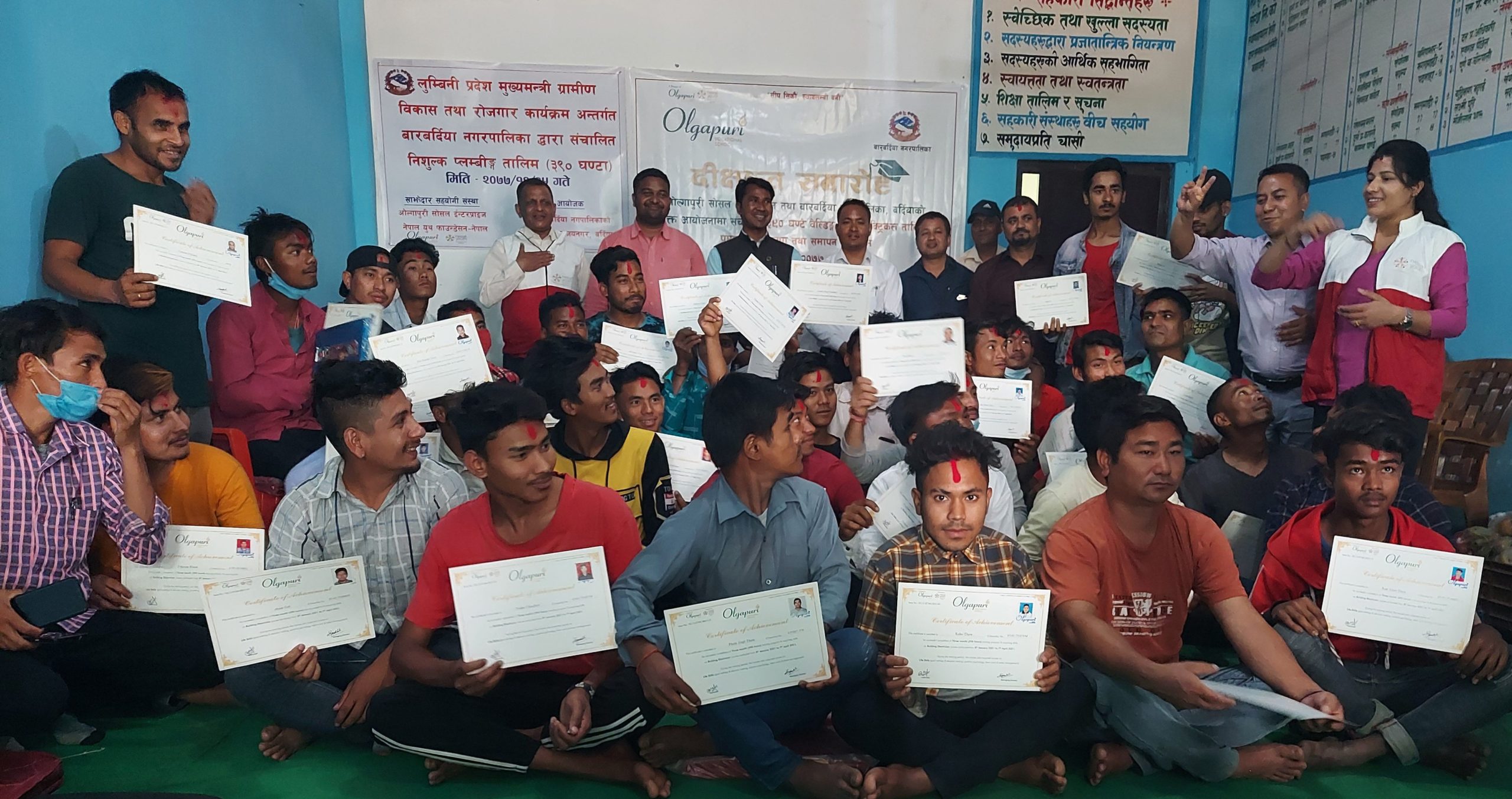
As we come up on one year since the vocational education courses began, we’re thrilled to share the positive impact this project had on its students, their families, and their communities.
Community Impact
Much to the benefit of their communities, the majority of our electrical program graduates have decided to work in their hometowns.
Before this program, electricians and their labor were very expensive. That made electricity unreliable at best (and thus more of a luxury than a real utility), and dangerous at worst (in the event someone decided to attempt repairs on their own, without training). NYF’s electrical graduates discovered quickly that there was plentiful work available for them close to home.
Local construction businesses can now take on new projects with greater confidence, since now they know there are skilled, trusted technicians nearby to accomplish this work. This, plus the affordability of services, has increased the demand for construction projects in the community. This is already resulting in an economy where local money continues to support local businesses. Even as the COVID crisis drags on, the standard of living is on the rise in the areas that have received these training courses.
Community members, too, soon learned that they can now receive prompt, affordable, high-quality electrical services from local young people who share their dialect.
Some of the plumbers and electricians in these two courses have already established their own small businesses. They’ve taken on apprentices from among the local young adults — creating new jobs and new experts.
We’re also proud that local governments and construction companies in nearby areas are requesting more opportunities for vocational education trainings. Even with this increase of new skilled workers, there is still enormous demand for exactly these kinds of experts. Nepal’s infrastructure is developing rapidly, and empowering local young people with the skills they need to provide these services will do tremendous good across the country.
One House, One Tap: Bhanu Municipality
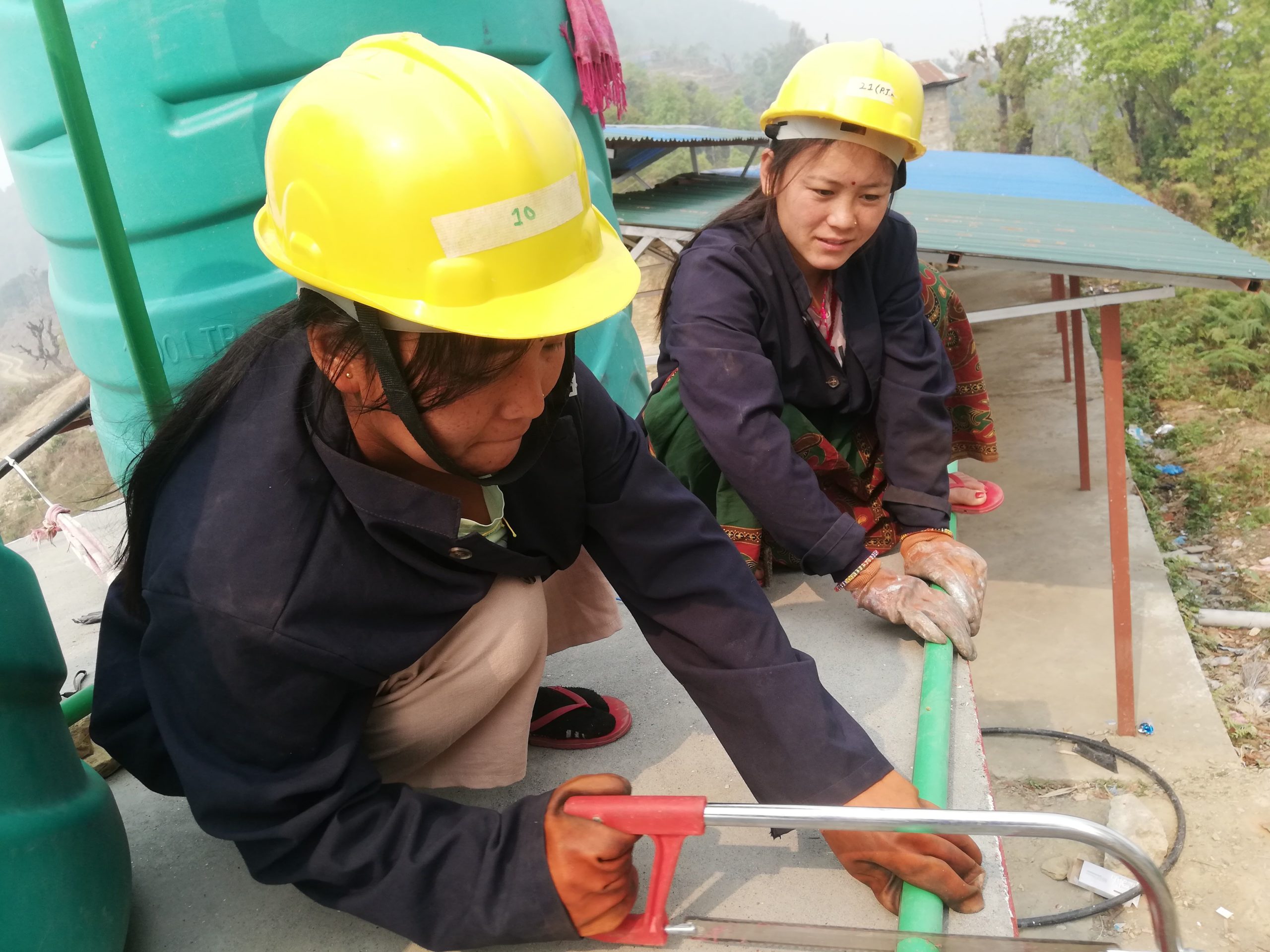
“One House, One Tap” is a country-wide government project that provides municipalities in Nepal with the funds to install running water in each household. This project had been of interest to local officials of Bhanu Municipality for a long time. However, there were not enough skilled plumbers in their region to provide the required labor. Thanks to this campaign, the region now has plenty of new plumbers. This has allowed Bhanu Municipality to finally take advantage of the One House, One Tap project!
We’re thrilled to share that our plumbing graduates are involved in installing running water to 55 households in Yansing Village and 32 households in Chokot. By February 2022, 12 graduates had installed and fitted the main underground pipeline to one of the villages. They also built two entire water reservoirs nearly to completion.
Until this time, Yansing Village in Bhanu Municipality only contained 7 taps total, which had been connected to a small natural spring at the top of a nearby hill (rather than to larger-scale infrastructure, as the new ones are). Individuals—most of whom live about 15 minutes from the nearest tap on foot—fetched water from these public taps on a rotating basis. Since it is so difficult to bring this water home, most families reserved it mostly for cooking and drinking purposes only, with hygiene being neglected.
The arrival of plumbers in this region is having a near-immediate, widespread public health impact. With tap water available in each household, families will be better able to maintain far better personal hygiene. This will help slow the spread of disease and increase their available time and energy for other tasks.
Individual Impact
Upendra G.
Upendra is a village social worker in Bhanu Municipality. He was enthusiastically involved in bringing the NYF training to the area. During the training period, he provided snacks for the trainees.
Upendra was one of the first people to hire the training graduates. He asked four of them to construct a full bathroom at his home. This included a sink, a toilet, a shower, drainage, and tiles, plus a tap for washing muddy feet.
Upendra’s bathroom is in a standalone building near his fields. It is also attached to a 1,000-liter water tank. His is now one of the best restrooms in the entire village. Soon after completing the construction, Upendra invited the local mayor to view this restroom.
“The mayor was surprised to see such a good toilet in the village,” Upendra said happily. “I shared how thorough and excellent the NYF training is, and how it has helped transform the youth with strong skills. NYF’s training has really been transformative for the entire village.”
Girija G.
Girija is a young NYF plumbing course graduate from Vanu Municipality. He lives with his family of lifelong subsistence farmers. When he married last year, he started searching for an additional livelihood to ensure the growing family could improve their self-sufficiency. He worried he might have to leave the village, or even the country, to find work.
Following the NYF plumbing course, Girija has good-paying work here in his own village and in villages nearby. This means that his family has the benefit of both his income and his presence. He is currently balancing plumbing work with farming to maximize the effectiveness on his family’s farm. This is an enormous gift to his parents, who are aging, and to his wife and their future children. Even working part-time, Girija is bringing in about 20,000 Nepalese rupees per month ($172), which is over 50% more than minimum wage for a full-time job in Nepal.
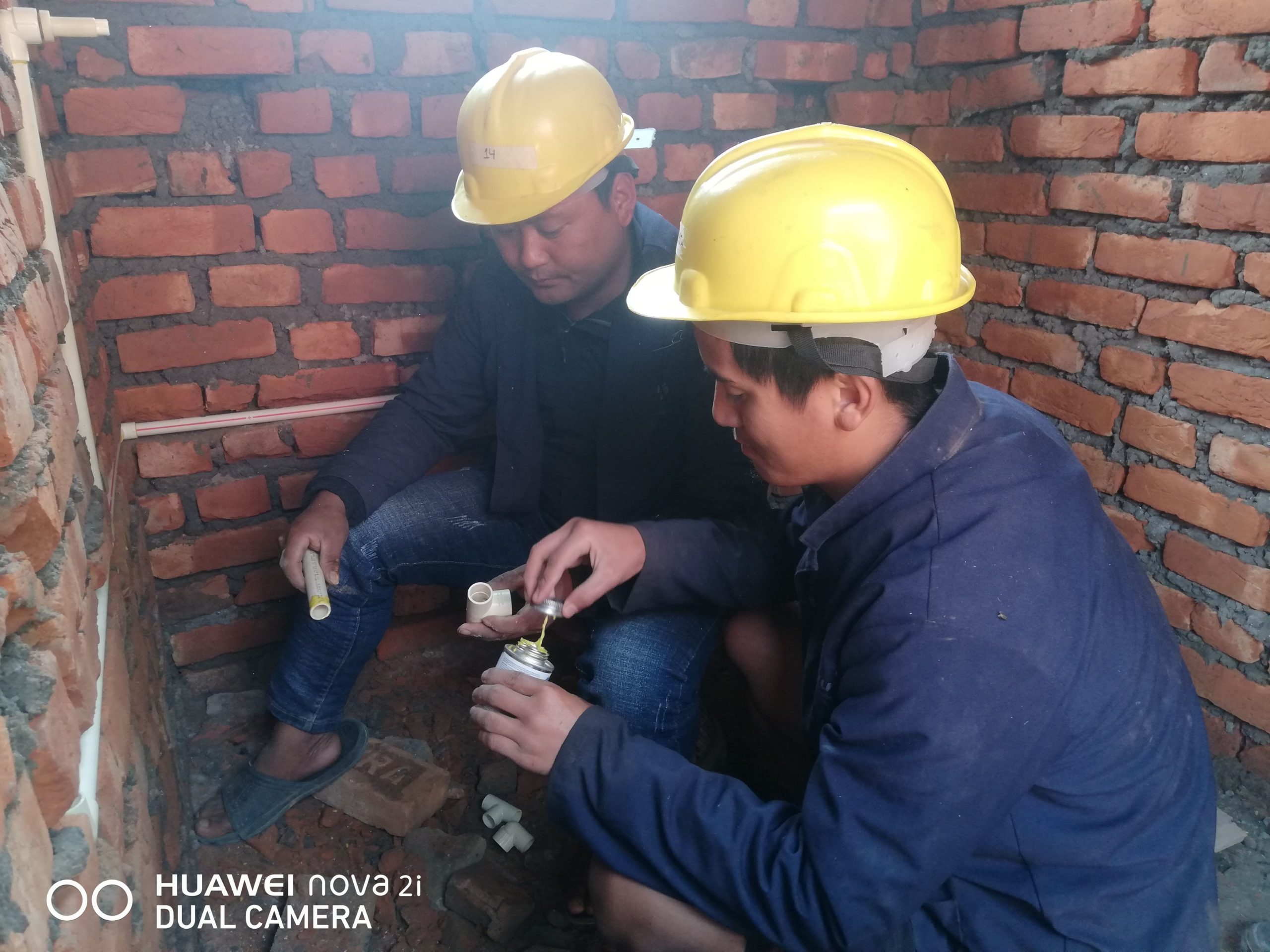
Girija’s parents are bursting with pride at their son’s accomplishments. He has become a huge credit to the village and is providing for the family in ways they only dreamed possible—everything a parent in Nepal dreams of. Meanwhile, Girija’s wife is happy about the family’s increased stability, even in this time of uncertainty with the COVID pandemic.
With this money, Girija and his family are excited about future possibilities. A potential full bathroom of their own, for example, which would immediately improve their family’s health. They may use some funds to purchase meat, dairy, or other staples to supplement their home-grown diets. They may upgrade some farming equipment, invest in other housing upgrades, or begin saving for schooling for their future children. This vocational education course has opened future possibilities for them all.
From all of us at NYF, thank you and dhanyabad!
We cannot overstate the continuing economic impacts of this pandemic in Nepal. Now more than ever, the youth of Nepal need viable job readiness training and career investment to allow the country to recover. Your loving support makes such a difference for these young adults and their communities!
Updates from NYF President Som Paneru
Dear NYF Community,
I hope you are all continuing to stay safe and healthy. Earlier this month, the Nepal government made an announcement to ease COVID-19 restrictions. Among other things, this included the physical re-opening of schools and public spaces. This decision has several impacts on our programs at NYF, and I am delighted to share these new updates with all of you.
COVID-19 Updates & Response Programs
NYF’s COVID Isolation Center at our flagship Nutrition Rehabilitation Home (NRH) ran until September 16, 2021. Since its opening, we’ve admitted and treated more than 240 COVID-positive patients at our facilities. Following this recent government decision to re-open public spaces, NYF suspended isolation center services on September 17th to fully resume our regular NRH programming. We are continuing to produce Lito, our homemade “super” flour, at the NRH and are still distributing them to communities in need via the Lito for Life program. For more updates and information about our COVID-19 response, visit NYF’s COVID Timeline.
Education
Until now, schools and colleges nationwide have been closed. Out of the 643 scholarship students NYF currently supports, 70% have been attending online classes run by their schools and colleges. After this most recent decision, most NYF children will likely be able to return to in-person classes later this fall. Additionally, after a massive COVID-related delay, the long-awaited examinations for grade 12 students finally took place on September 15, 2021. About 40 NYF students took the exam.
Vocational Education & Career Counseling
As you may recall, most of our vocational training programs were put on hold earlier this year. We are happy to announce that NYF has safely resumed some training programs in the electrical, welding, carpentry and plumbing trades. Effective last week, we have 4 vocational training satellite courses currently running. NYF is also preparing to complete 2 more Sustainable Agriculture and Entrepreneurship Trainings (SAAET) by the end of the year.
Nutrition Rehabilitation Homes (NRH) & Nutrition Camps
There are currently 8 children being treated at the NRH for malnourishment. We are expecting an increase in the number of admissions as we resume our regular services and programming. Our NYF nutrition staff is also busy strategizing how to safely conduct our regular nutrition camps this year.
New Life Center (NLC)
Due to travel restrictions brought about by COVID-19, patients had a difficult time traveling to the New Life Center in Kathmandu Valley to receive treatment. In order to increase access to supportive care for children living with HIV/AIDS in rural communities, NYF has redesigned the NLC program.
The aim of this redesign is to bring New Life Center resources to a larger population of children. To do so, we’ve moved beyond the “residential-treatment only” approach to an expanded “outreach and community-based” approach. According to the new plan, the NLC will cater residential services to approximately 20 children, while all the other services will be completed in rural communities via community outreach. These community outreach programs include awareness and advocacy, food and essentials delivery, financial support for caretakers, and tele-counseling services.
While this program will still be run from the NLC office in Kathmandu, we are excited to partner with a number of grassroots organizations — all doing incredible work in the communities we plan to serve.
Olgapuri Children’s Village
First and foremost, all 71 children (and house parents!) at Olgapuri remain safe and healthy. This year, nine students will soon be moving out after graduating high school. We are so proud of each graduate, and look forward to seeing them go on to do incredible things!
Thank you for your support.
Friends, we are deeply grateful for your continued love and support for the children, young adults, and families in our care. Thank you, also, to our staff on the ground in Nepal and for their incredible work. As always, if you have any questions about these updates or would like more information about our programs in general, please don’t hesitate to contact us at info@nepalyouthfoundation.org.
With gratitude,

Som Paneru
NYF President
International Youth Day 2021: SAAET Stories from Early Project Graduates!
International Youth Day
International Youth Day occurs every year on August 12th. It’s a valuable chance created by the UN to focus on the biggest issues facing young people throughout the world. The theme in 2021 is “Transforming Food Systems: Youth Innovation for Human and Planetary Health.” As the world population grows and nations respond to climate change, sustainable food systems will become more important than ever. To achieve the necessary changes, the participation of young people is critical!
This International Youth Day is a great opportunity to share some of the earliest success stories from NYF’s new SAAET Project!
The SAAET Project
Saaet is Nepali for “an auspicious moment of starting a new journey” – and at NYF, it stands for Sustainable Agricultural and Entrepreneur Training.
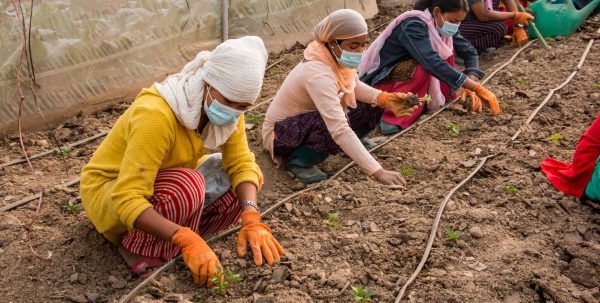
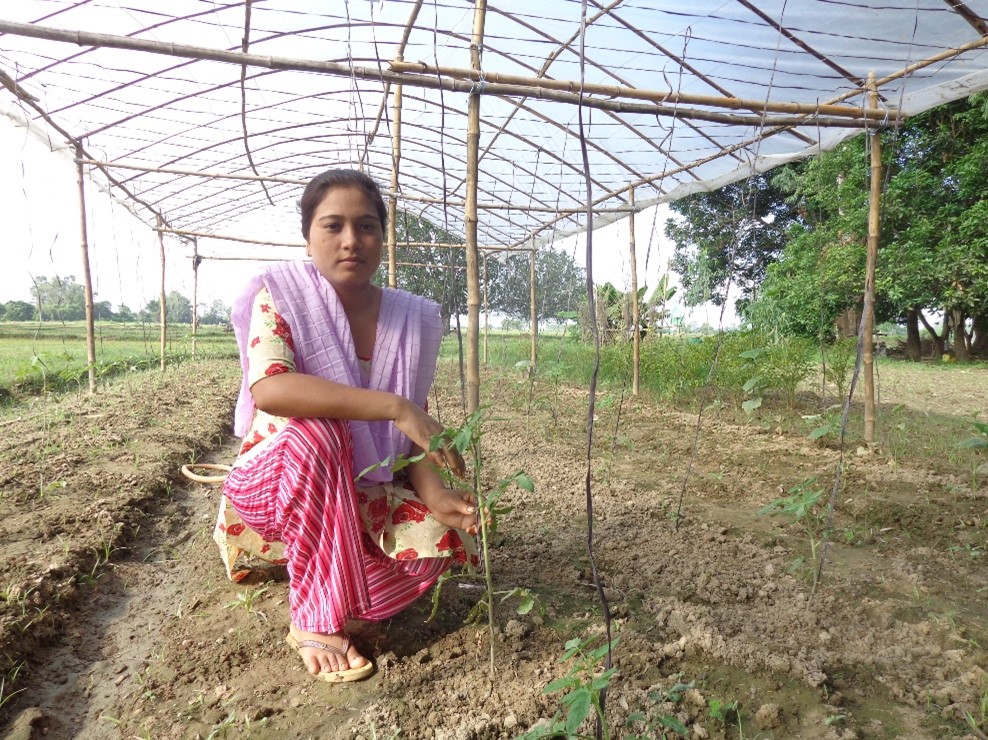
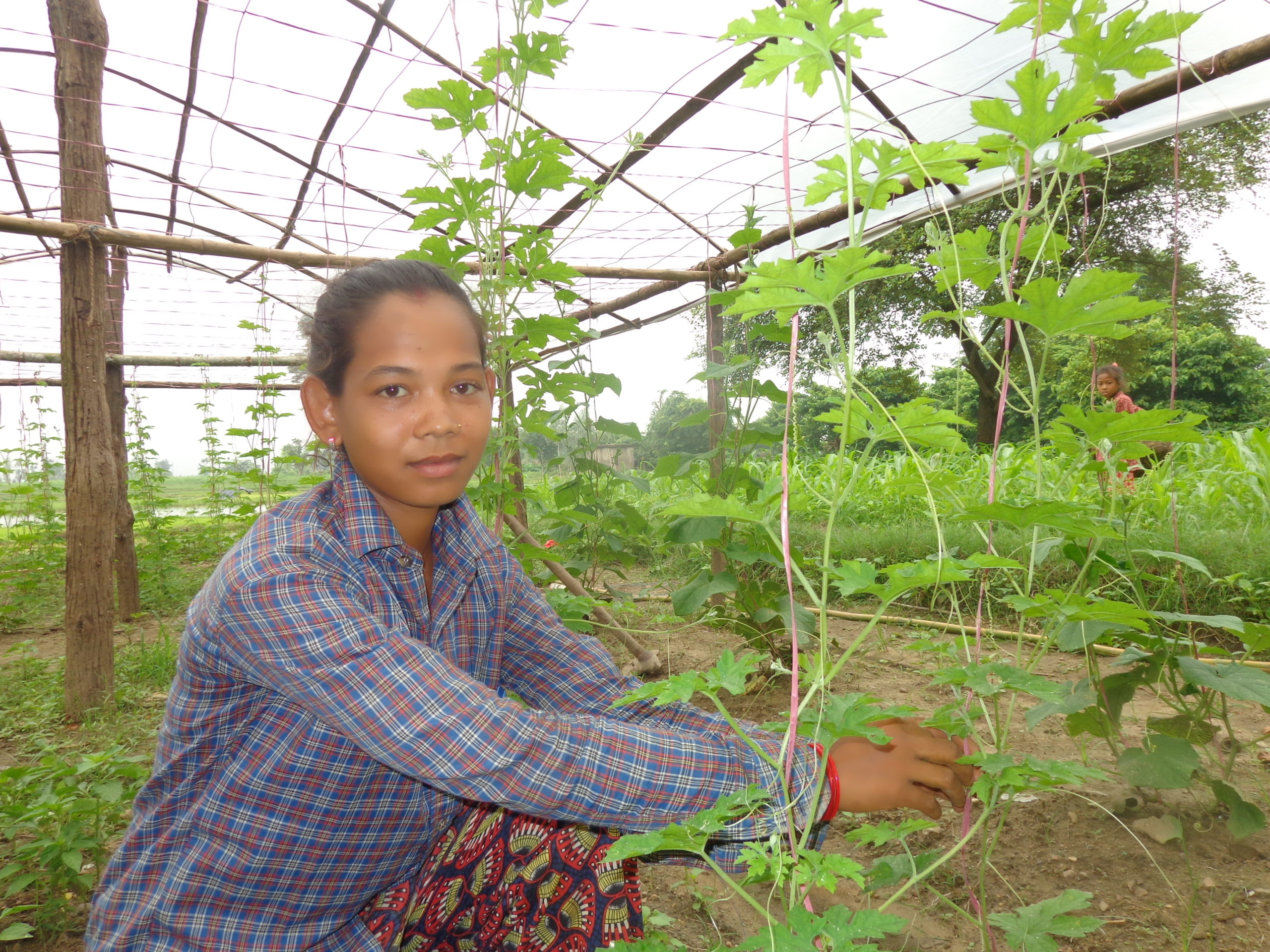
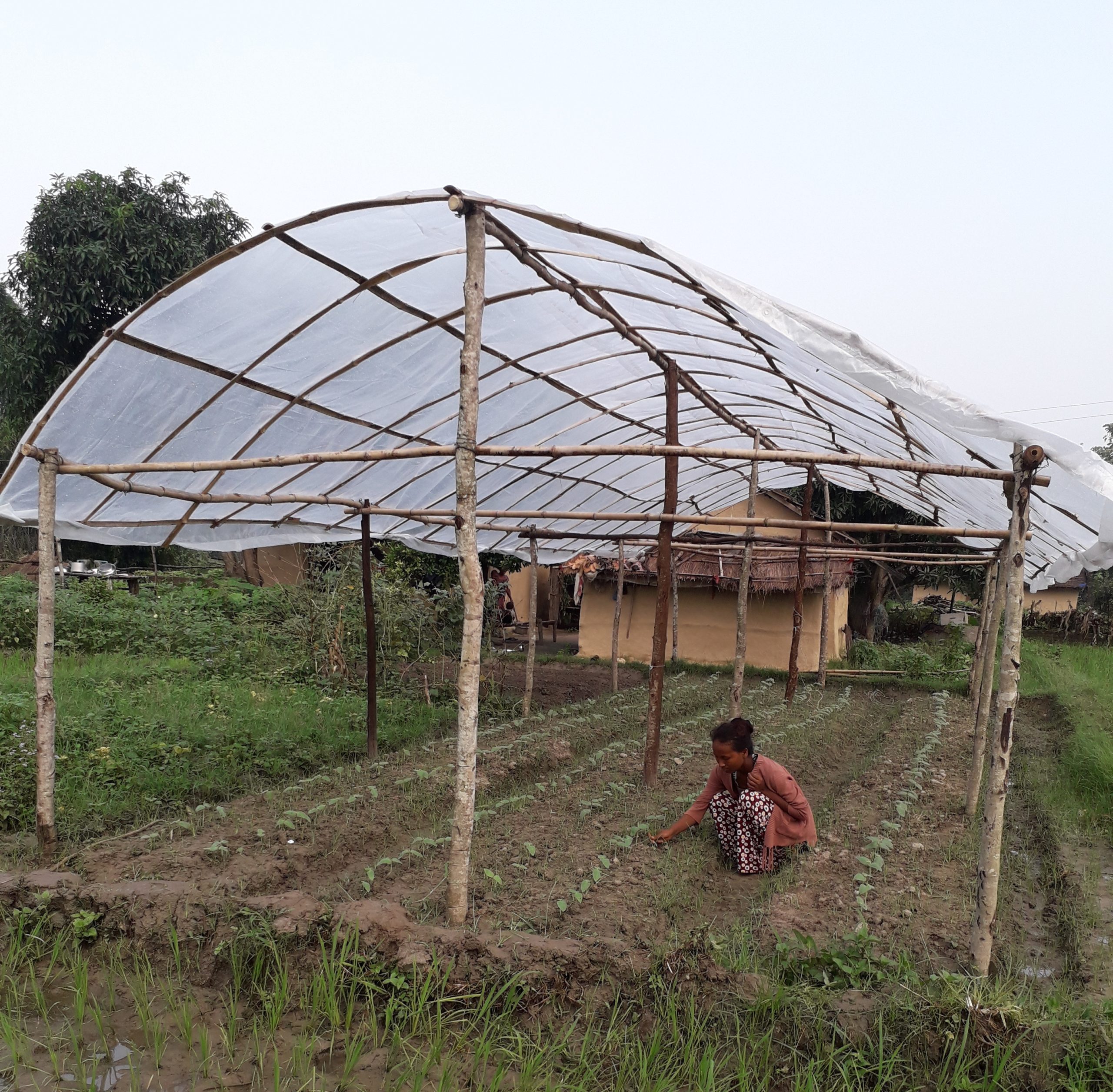
This project tackles gender inequality, skills development, and food systems all at once. Designed especially with young women in mind, this course brings simplified greenhouse technology and up-to-date organic agricultural practices to individuals hoping to achieve financial success while staying within their home communities.
NYF’s Vocational Education and Career Counseling Program (VECC) offers multiple job readiness and vocational education options to Nepalese young people seeking career opportunities close to home. Those we help are experiencing many different kinds of barriers to economic success—but those most in need are usually young women.
The SAAET Project is just one part of NYF’s work to combat child marriage in Nepal, and part of our commitment to helping young women and girls find economic empowerment on their own terms.
Our first class of SAAET students were Freed Kamlaris from the Western Terai. Their training took place in March-April 2021—let’s see how they’re doing!
Sunita T.
When Sunita was only 13 years old, her father sent her to work as a kamlari far away from her home in Bardiya District. In exchange for her labor, the family was promised two things: they would be allowed a large enough plot of leased land to feed the family year-round, and Sunita would be sent to school.
As so often happened, the family broke their promise about Sunita’s education. She worked as a kamlari for 5 years, until she was 18 years old. NYF knew about her situation from surveys conducted in the village, and we had to threaten legal action to finally bring her home.
Sunita is 26 years old now, and the memories of her days as a kamlari are still fresh and painful.
She worked extremely long hours, from early in the morning to very late at night, locked in the house doing cooking, cleaning, childcare, and any other work that came up. Sunita hopes no child ever has to suffer that way again.
Once rescued, Sunita enrolled in grade 6 and managed to complete her studies through grade 10. In Nepal, all students must take the notorious “Iron Gate” exam (the Secondary Education Examination) at the end of grade 10. This extremely rigorous test determines who can move forward. Sunita was unable to pass the Iron Gate, so her academic studies ended there.
She got married in her early 20s and, through NYF support, took an 18-month vocational course in agriculture. Sunita and her husband decided they preferred the idea of farming over the notion of working for someone else, so they applied for a microloan from their local co-operative and started banana farming. Soon they added vegetables, chickens, and pigs. Sunita and her husband have been happy to be able to pay back the co-operative loan, and they’re paying the lease on their land through their own earnings now.
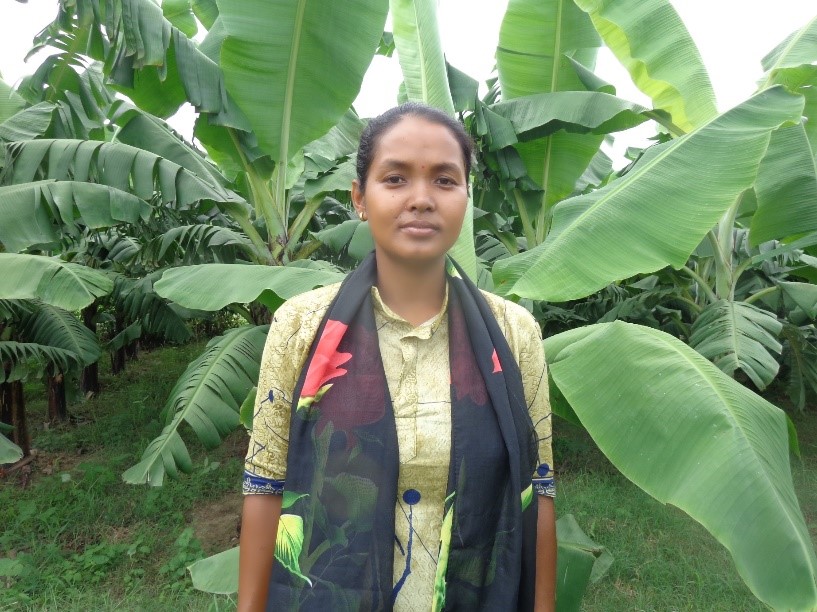
But Sunita hopes to be able to own the land outright and expand the business further.
That’s why she was so happy to join the first class of the SAAET Project. The material taught in the class expanded Sunita’s existing knowledge of best agricultural practices and gave her great new ideas for her farm. She also learned helpful business practices!
When she returned home, the spring COVID outbreak was just hitting the Western Terai, and shutdowns made accessing building materials more difficult than expected. But Sunita was still able to start working on her own new greenhouse, which will allow her even more crop flexibility. She is already harvesting her first greenhouse crops, and she’s looking forward to being able to continue growing vegetables through the winter months. Sunita and her husband are hoping their farm will become a model for other farmers in the region.
“Dhanyabad, NYF!” she says. “I am very grateful for the invaluable support I have received from NYF which has transformed my life beyond my imagination.”
Lila C.
When Lila was born, her entire family was bonded in a practice called Kamaiya. Nepal abolished the Kamaiya system in 2000, freeing the family from this exploitative practice. But without much government support for families like Lila’s, they soon needed access to farmland they could only get by making Lila a kamlari for their landlord. (Kamlari was the last remaining piece of the old Kamaiya system.)
“My landlords did not send me to school, but I missed going to school badly. I was studying in grade 4 when I had to become a kamlari,” Lila says. “I had to sacrifice my education just for my family to be able to get two decent meals a day. There was no way the landlord would give us the land for farming if I refused to work.” Lila was ten years old and carrying the threat of her whole family’s starvation on her shoulders.
As a kamlari, “I had to do all the work from cooking, cleaning and looking after the landlord’s children, to cutting and collecting fodder for the cattle,” she recalls. “If I was ever late to come home or late for work, I would be scolded badly.”
One year into her time in bondage, Lila learned about an anti-kamlari campaign in her village. “I feel so lucky that I did not have to work as a kamlari as long as so many of my friends did,” Lila says. NYF had been collecting the names of known kamlari girls, and Lila’s name had appeared on these lists. “I was worried I wouldn’t be able to go to school after returning home, but on the day of my rescue, I heard that the same organization would be sending me to school, too. I felt so happy. And I suddenly felt so relieved and light at heart because I would not have to bear the anger and scolding from the landlords anymore.”
Lila studied all the way through 12th grade and then completed an 18-month agricultural science course on an NYF scholarship.
She and several other freed girls established their local co-operative to help their community grow its economic power, and Lila helped her family start up a vegetable farm that could feed them year-round and even bring in up to $60 a month.
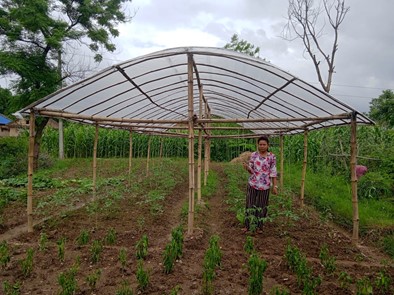
Lila got her greenhouse started right away when she returned home from the SAAET training. Her family is already seeing the benefits of the program on their diet and on their ability to bring in extra cash! She is looking forward to adding in the drip irrigation system soon, and is planning her strategies for fall and winter crops.
Now, at age 26, Lila knew she needed a bit more specialized knowledge to take the family farm from subsistence agriculture to a fully-fledged business. She was thrilled to hear about the SAAET Project.
“During the training I learnt about increasing production by growing vegetables throughout the year using more efficient tools and techniques,” she explains. “I also learnt about organic farming and producing organic pesticides by myself. NYF not only provided the skills but also a start-up fund for us to build a greenhouse. With the money and the skills, I and my family have built a greenhouse near our house and have already started vegetable farming. I am confident that we can produce far more than before and increase our income. Gradually we plan to expand greenhouse farming and establish a successful business.”
Arati T.
Arati was ten years old when her father sold her off as a kamlari in a different village. “Even now, I always get sad and wonder what made my father to sell me as a kamlari,” Arati says. “I try and console myself that it was not entirely his fault alone, and that he was a victim of the oppression and the ill practice of slavery of the Tharu people.”
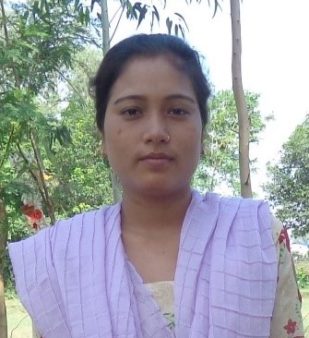
Memories of her kamlari years are painful and difficult for Arati.
“My parents had sent me as a kamlari on the condition that I should be sent to school. The landlords therefore admitted me in school, but I was able to go to school only after finishing all the work at home. I had to wake up in the dark hours before four o’clock in the morning and start my chores. I looked after the landlord’s children, cooked, cleaned, did the dishes, and all the other chores around the home. The landlords would get very angry if I made any mistake and scolded me constantly.” Arati takes some faint consolation in the fact that her landlords did not beat her.
“I was desperately looking for a release from this condition,” Arati recalls. “I wanted to be free like other children and go to school like them.”
After three years, a massive anti-kamlari campaign took hold in Arati’s village and NYF rescued her from bondage by NYF. “I felt very lucky that I got this life changing opportunity,” she says, “and I pursued my studies seriously.”
Arati recently completed the 12th grade. During her studies, she was part of a group of freed girls who established a local co-operative for savings and credit. She’s a proud contributing member of this co-op.
Back in 2018, Arati and her family acquired a plot of land to start a vegetable farm—but they have not managed to run it in a systematic, commercial manner. Arati signed up right away when she heard about the SAAET Project, knowing the training would make a huge difference.
“During the training we (21 girls including me) learnt a lot about using more advanced tools and technology for greenhouse farming, and about adopting agriculture as an income-generating enterprise.
After I returned home from training, I have built a greenhouse and started vegetable farming with the help of my family. I now have the knowledge about both seasonal and off-season farming, which will enable us to produce vegetables throughout the year. I am confident that by using the knowledge and skill I acquired from the training, we can easily increase the production and income by as much as three times than what we are able to do now. My parents are also very happy and proud of me and the work we are doing as a family.”
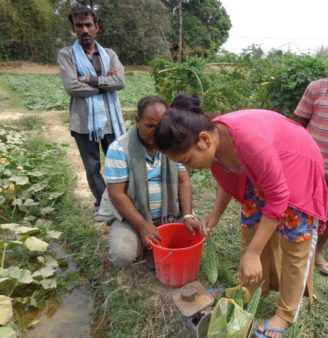
Those in Arati’s village are already spreading the word that she has vegetables to sell! Her farm, and others like it, will make an enormous difference in the health of the surrounding communities.
Only the Beginning
The SAAET Project has developed organically as NYF has responded to the pandemic—and we are enthusiastic about developing it further. This International Youth Day, we are so proud to be helping communities of young people pull their communities forward using new innovations and skills.
As Nepal’s economy heals from the COVID-19 pandemic’s impacts, young people in Nepal will need job preparedness training and career education more than ever.
To help us continue offering the SAAET Project and other vocational training programs, please donate today, and share our message on social media!
(For an even greater future impact, consider celebrating National Make a Will Month throughout August 2021 by joining our Legacy Circle!)
World Youth Skills Day: Celebrating NYF Breakthroughs During COVID
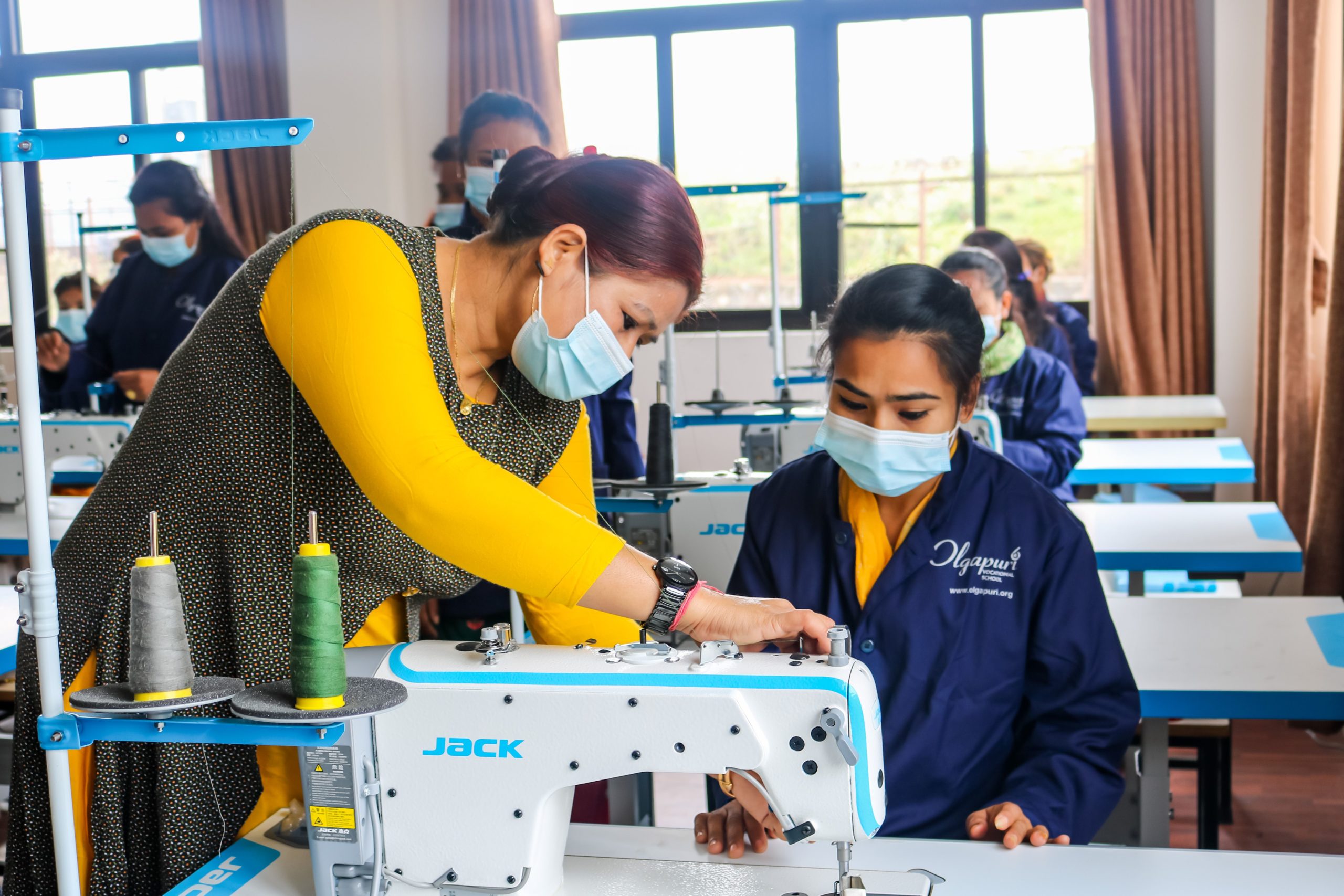
The United Nations General Assembly declared World Youth Skills Day in 2014. Each July 15th since then marks an opportunity to “celebrate the strategic importance of equipping young people with skills for employment, decent work and entrepreneurship.”
COVID-19 has hit the world economy hard. But many are surprised to learn that globally, young people aged 15-24 have been impacted more severely than any other group when it comes to employment. World employment for all adults fell 3.7 percent in 2020. For young adults, the rate was 8.7 percent.
Young women have been hit even harder than young men.
Empowering young adults with strong paths to employment will be critical to the global recovery from the COVID-19 pandemic. This is especially true in Nepal, where extremely low pre-pandemic employment levels were already hindering economic growth and opportunity for young people.
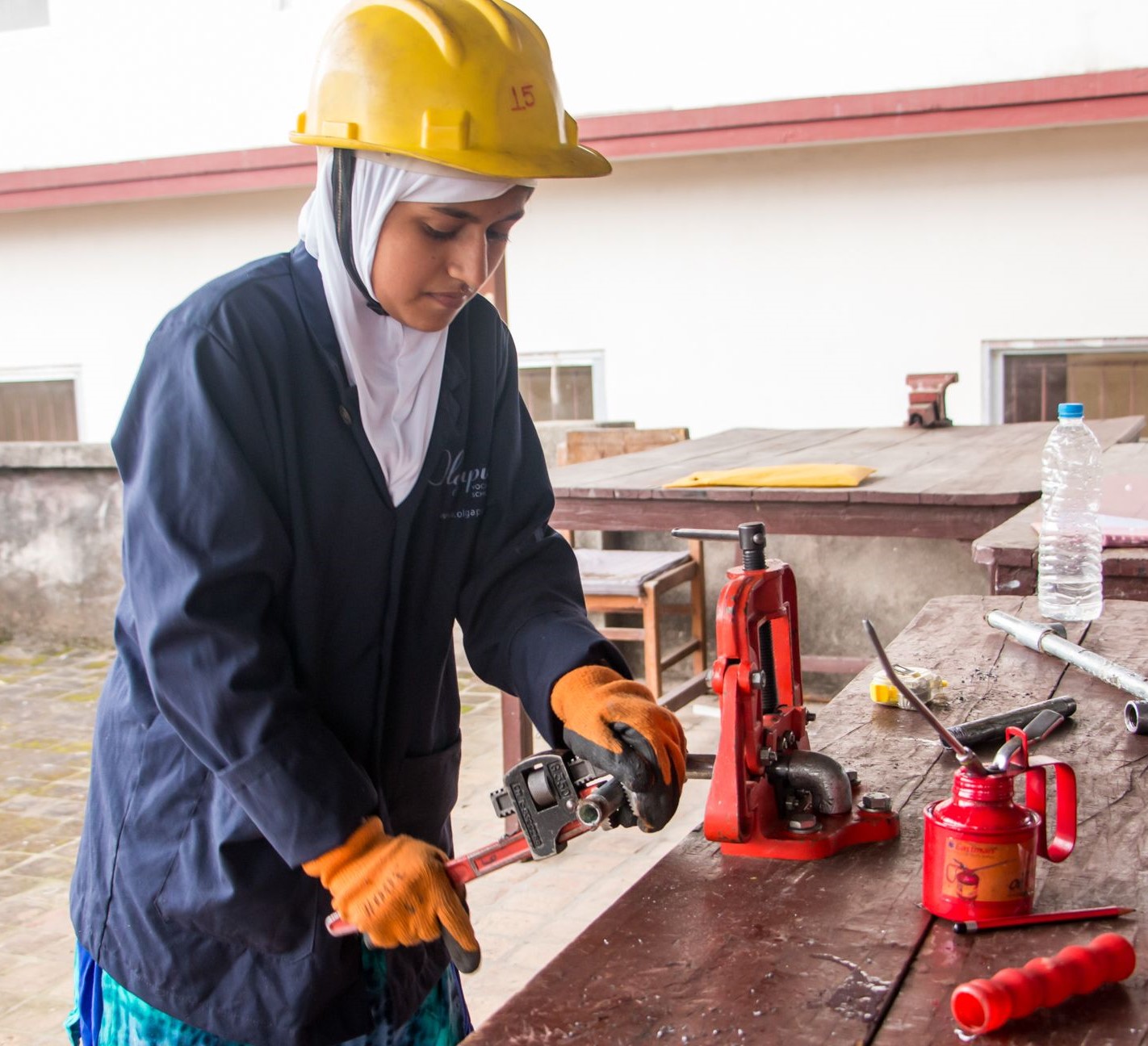
The UN is urging countries to invest more in job-readiness education for young people. This applies not only to traditional academic education, but to vocational education, skills training, career counseling, and other paths towards independence and economic empowerment.
This World Youth Skills Day, NYF is highlighting our work in Vocational Education and Career Counseling—including high-impact programs like Olgapuri Vocational School, Vocational Diploma Scholarships, and our new SAAET (Sustainable Agricultural and Entrepreneur Training) program!
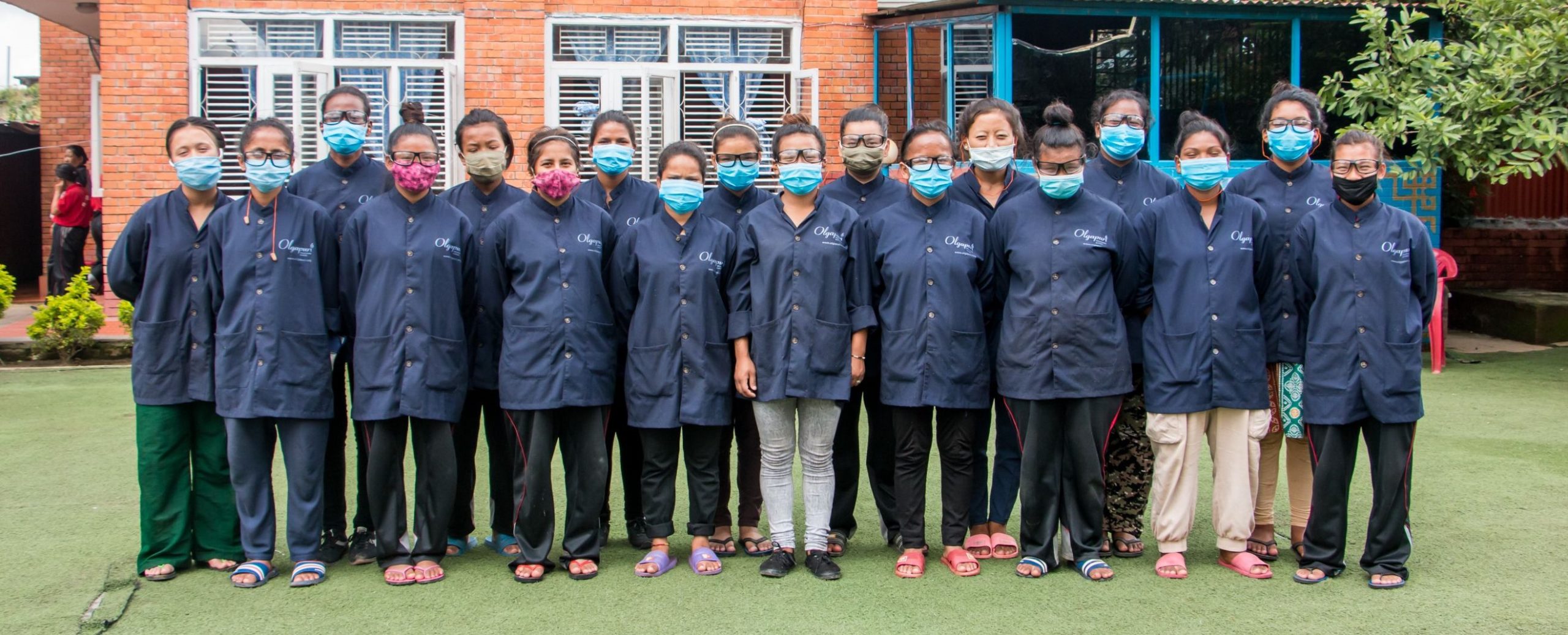
Vocational Education and Career Counseling
Many young people in Nepal are unable to complete their grade school education. Whether due to personal aptitude, economic barriers, inaccessibility, trauma, or other factors, the academic path towards success is sometimes not possible.
The demand in Nepal is high for skilled work. Especially since the 2015 earthquake, many career opportunities exist for welders, electricians, carpenters, woodworkers, and plumbers. During normal years, tourism is also an industry offering strong careers in restaurants and hotels. These careers pay much more than the backbreaking daily labor many Nepalese young people find themselves taking—the labor many of them watched their parents perform for decades while never being able to build wealth and prosperity.
However, though the demand is high for these skills, Nepalese companies often struggle to find qualified, trained local young people. As a result, workers from India and other countries fill so many of these high-paying positions.
Meanwhile, young Nepalese men and women can often only find job prospects beyond their country’s borders and far from family, where language barriers and other factors make them vulnerable to exploitation. These overseas positions separate families for months on end and provide workers with barely enough money to get by.
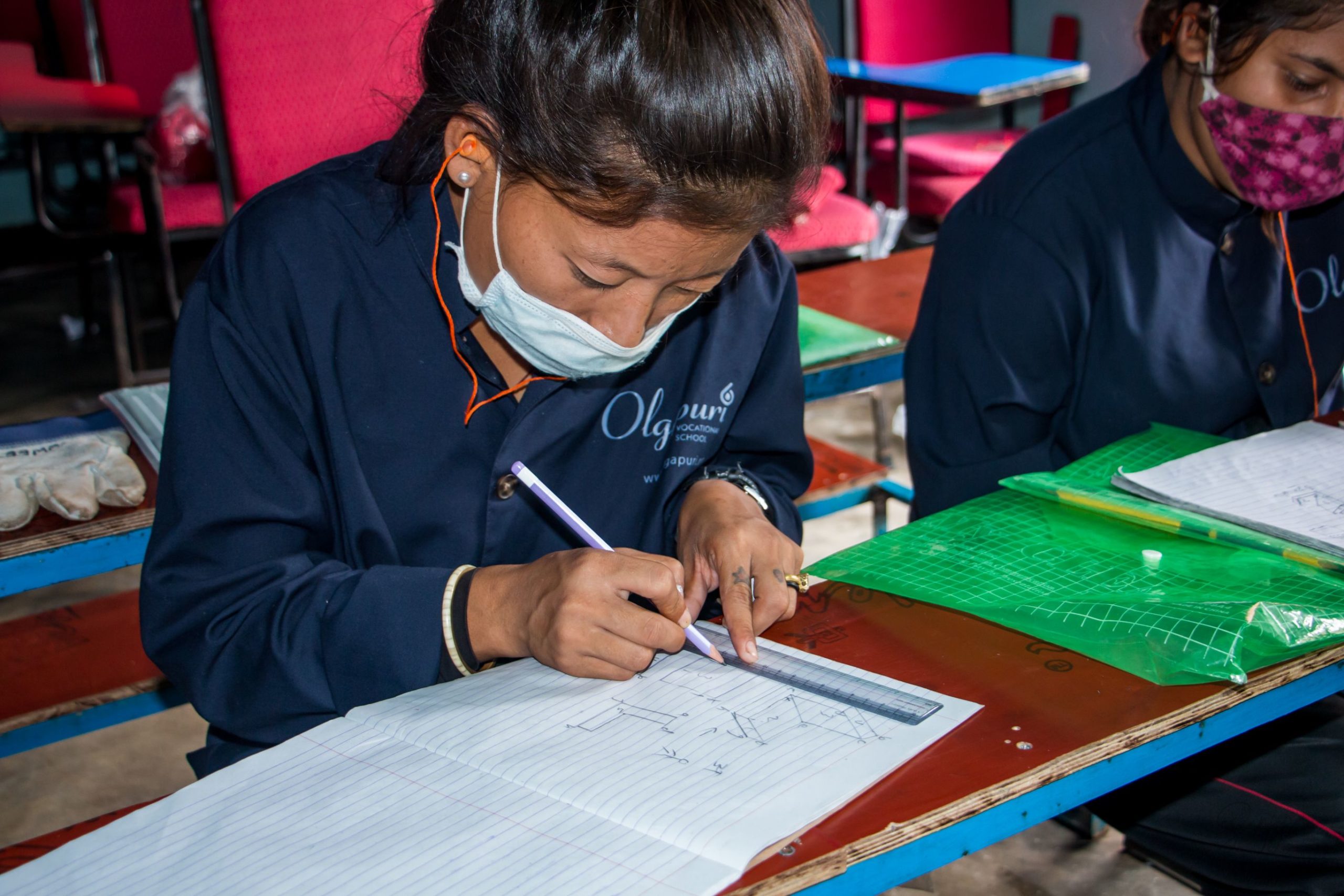
Even for more traditional Nepalese paths, like those in agriculture, valuable modern innovations exist that can raise crop yields and strengthen individual efficiency. But individuals must learn these innovations, and many in Nepal’s rural farming communities have limited access to this information.
In recent years, NYF has been working to expand access to career opportunities for Nepal’s young people.
Our Vocational Education and Career Counseling program provides young men and women with incredible opportunities. Those in our programs receive intensive skills training from expert instructors, entrepreneurship guidance, small business admin and accounting lessons, resume-building and job search support, start-up microgrants, and connections to other young adults on similar paths towards personal economic empowerment.
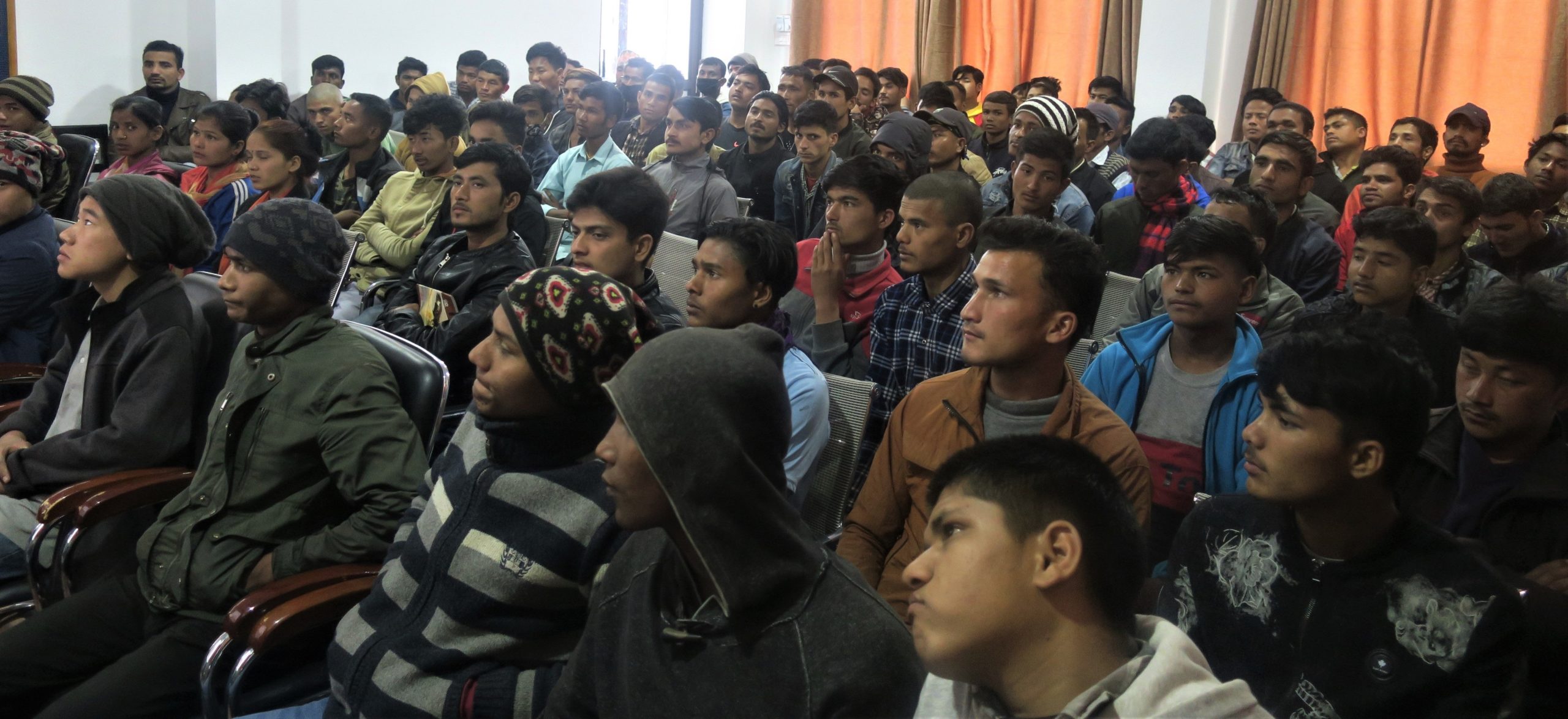
Olgapuri Vocational School
Olgapuri Vocational School (OVS), located on the Olgapuri campus in Kathmandu Valley, brings 20-student classes of men and women together for 3-month certification programs in electrical, plumbing, carpentry, welding, and more. Programs shift to match needs NYF has identified through contacts at major Nepalese companies. We also offer specialized courses in fields like industrial tailoring or special agricultural topics including unique crops (like mushrooms or henna) and innovations (including greenhouse technology).
In normal years, around 90 percent of OVS graduates are employed in their chosen fields within six months.
During most of the pandemic, students have been unable to come to OVS due to travel and safety restrictions. Instead, we have begun taking OVS to rural communities as we launched our Satellite Olgapuri Vocational School program.
Instead of bringing individuals from multiple villages to Olgapuri Vocational School, we sent our trainers—fully equipped with the necessary tools and equipment—out to quarantine in individual villages, conducting the training there before moving to another village.
Soon after launching, municipality offices and schools began reaching out to request these satellite trainings. Requests arrived from all over: including a girl’s school, a children’s home, and an addiction recovery center for young adults.
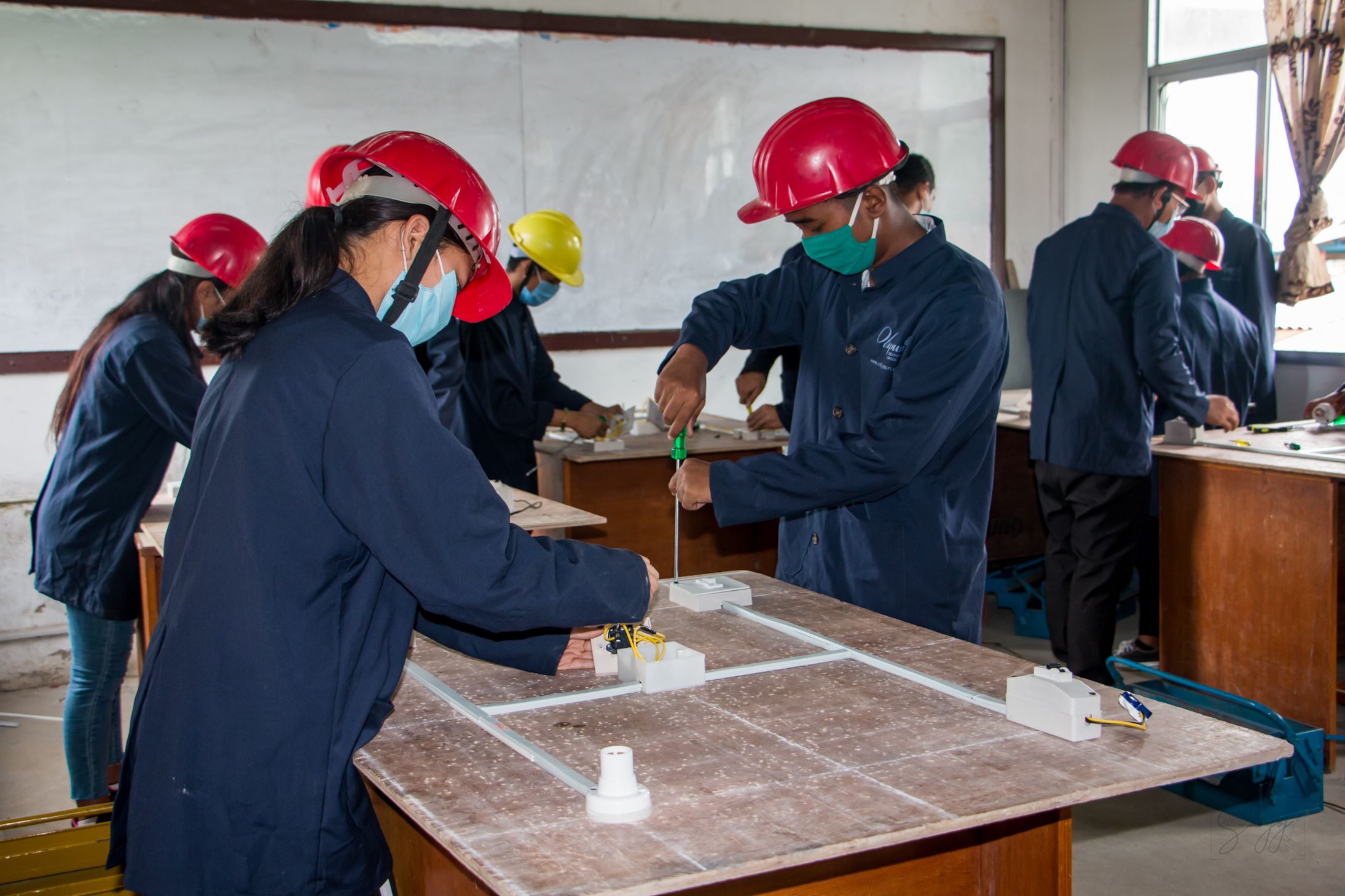
In the final half of 2020, we were able to conduct Satellite Vocational Training courses in nine villages.
A total of 255 students received a full course of training in electrical, plumbing, carpentry, or welding by the end of 2020. Of these, 77 were young women—a higher rate of interest than we usually see. NYF believes this is because the satellite version allowed students to study their new skills without leaving their home villages. This insight is informing the development of new vocational education programming especially for young women.
Empowering Freed Kamlaris
Young Tharu women associated with our Empowering Freed Kamlaris program are still eligible for special skills-based trainings held in their native Terai region of Nepal. Most of these women join our “Tea and Snacks Shop” training program, which teaches the principles of small business ownership and provides start-up funds for each woman to open her own roadside business. Graduates of this program have used their proceeds to buy livestock, to purchase farmland outright, or to educate their younger siblings. Some have even hired their parents or husbands to run secondary locations! In 2020, even through the pandemic, 334 Freed Kamlaris received skills-based training.
Vocational Diplomas
Finally, young people may receive NYF scholarships for earning Vocational Diplomas at long-term technical institutions. Careers may include nursing, engineering, agriculture, the culinary arts, and hotel management. During our 2019-2020 year, 54 students received vocational scholarships, with 9 individuals graduating.
SAAET (Sustainable Agricultural and Entrepreneur Training)
Saaet means “an auspicious moment of starting a new journey”.
As part of NYF’s commitment to helping young Nepalese women build personal economic prosperity and to provide an alternative to child marriage in rural communities, we introduced a new vocational education project in 2021. Called the SAAET Project, or Sustainable Agricultural and Entrepreneurship Training, this satellite-type vocational education program teaches young women how to build and maintain greenhouses, use best organic farming practices within them, and to run a greenhouse-based business.
The program launched on March 22nd with 21 young women (all of them Freed Kamlaris) in the first round. These women learned modern, sustainable methods for producing increased vegetable yields with smaller spaces and reduced labor—and many of them have already built their own greenhouses and planted their first crops. They are looking forward to sharing what they’ve learned with their friends and neighbors!
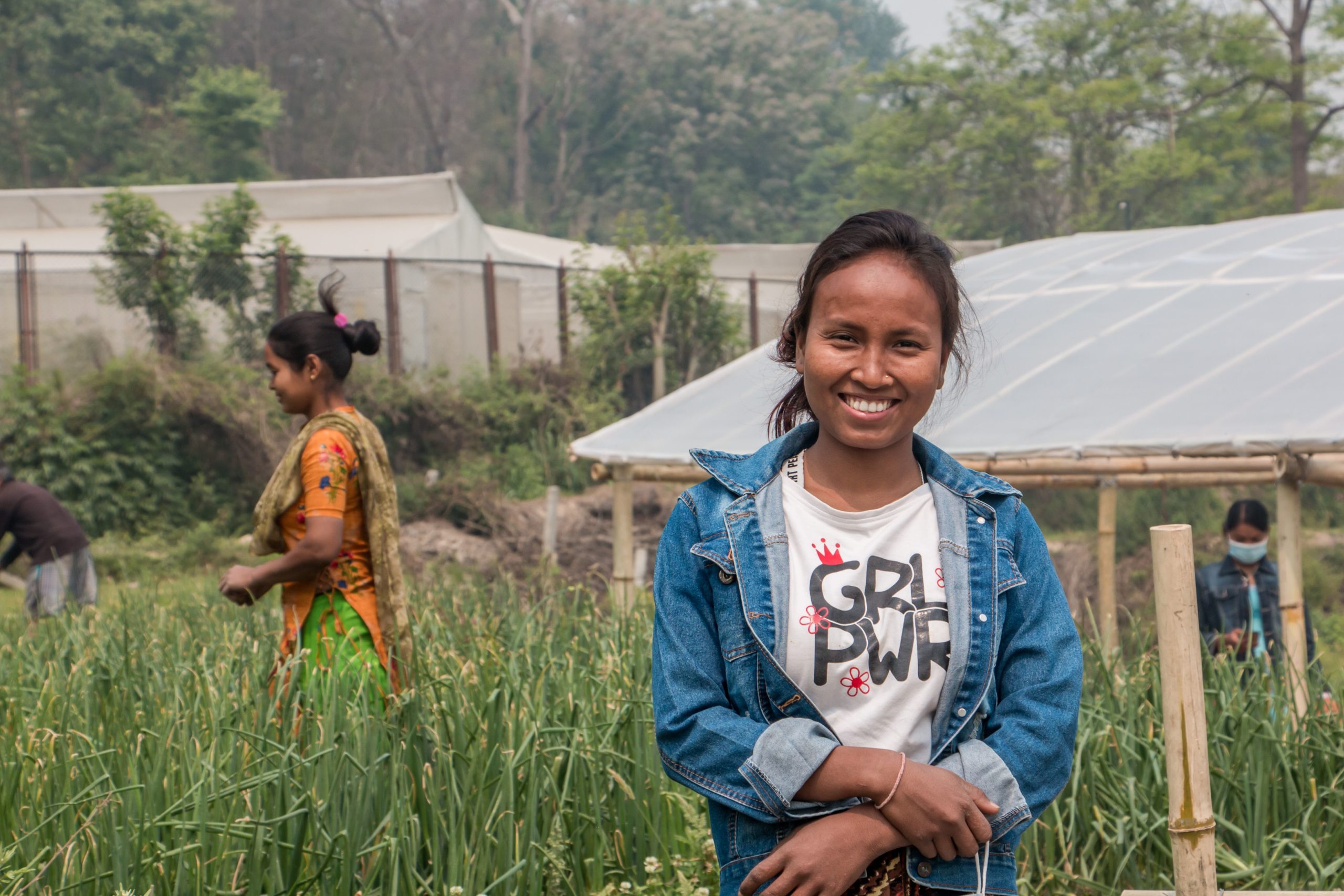
Visit https://nepalyouthfoundation.org/saaet-project-intro/ for more information!